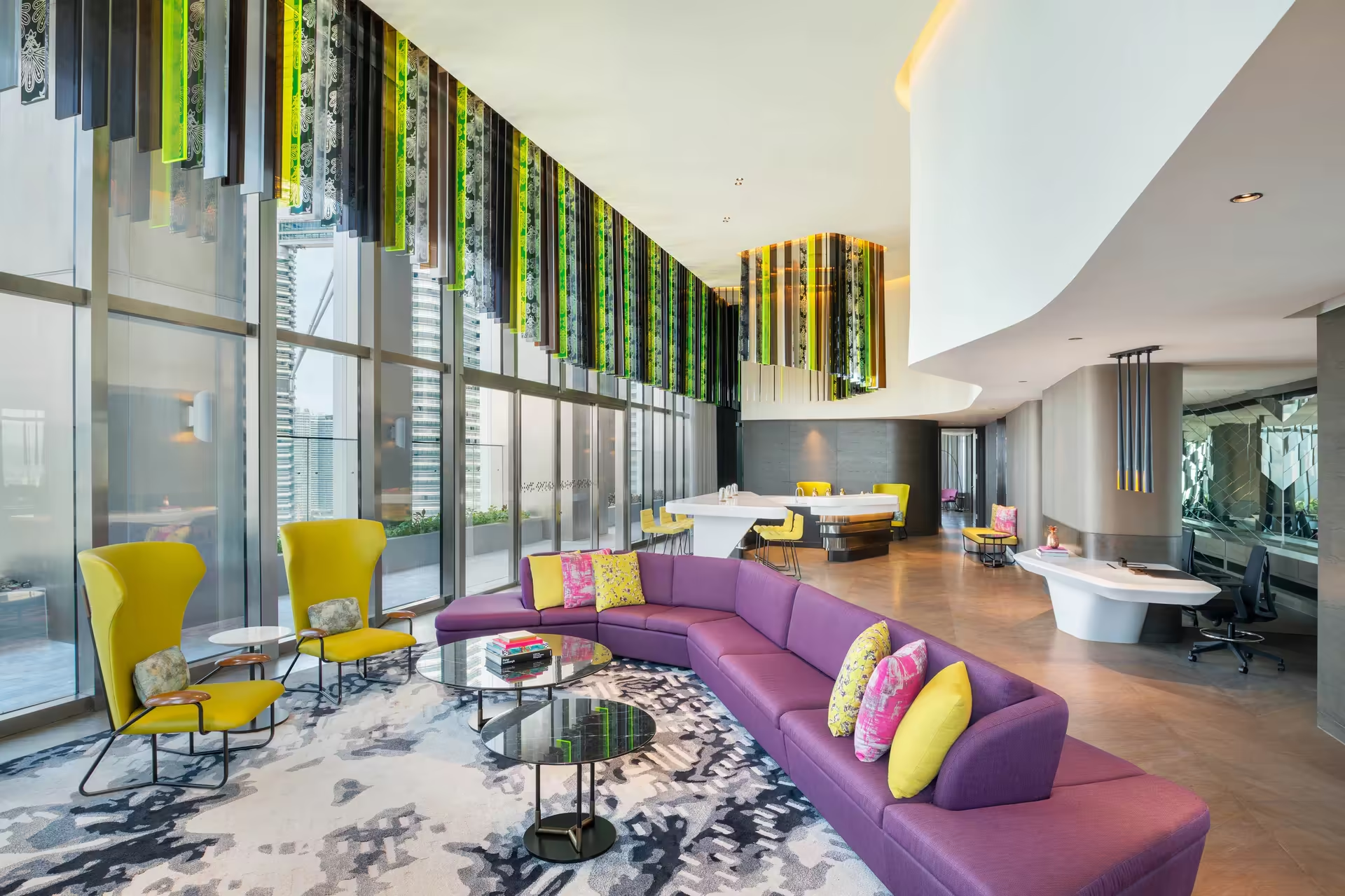
Airscan helps the hospitality industry improve the environmental conditions that protect guest comfort, staff wellbeing, and brand reputation—across rooms, shared spaces, and operations.
Hospitality buildings are dense, mixed-use environments. Guest rooms, kitchens, spas, laundry rooms, back-of-house and shared areas all generate very different environmental loads, yet they’re often served by shared or legacy systems. At the same time, energy-efficiency targets have driven tighter building envelopes that limit passive dilution of pollutants.
Environmental quality is quite literally the product in hospitality. Air quality, comfort, light, and sound insulation is the difference between a pleasant stay or an unpleasant one. And this flows straight into reviews, repeat bookings, and brand reputation. Airscan helps operators raise the essential environmental conditions driving guest experience – by diagnosing and applying targeted improvements across air quality, ventilation, thermal comfort, energy, and noise-related risks.
$10M
Each 1-point increase in guest satisfaction scores (100-point scale) is estimated to drive an additional $10 million in annual revenue for large hotel brands.
88%
Demand-Controlled Ventilation (DCV) can reduce HVAC energy consumption by up to 88% while staying within healthy parameters.
22%
Research shows that guests are willing to pay 14% more for rooms with excellent indoor comfort.
Airscan supports hospitality operators by measuring, verifying, and improving the environmental conditions that define guest experience, staff wellbeing, and operational resilience.
High-resolution diagnostic testing to establish critical environmental baselines and identify pollutant sources in guest rooms, public spaces, or newly renovated areas.
Establish real-world environmental performance across facility - identifying gaps and potential risk profiles that often reveal common but overlooked culprits such as new furnishings, cleaning agents, ozone, and mold.
Structured testing to isolate environmental contributors behind recurring odour, irritation, or discomfort complaints.
Ensuring facility meets minimum health standards, such as those defined by CIBSE or ASHRAE, or more market specific standards like ICOP in Malaysia.
Smart ventilation allows hotels to actively reshape how air is delivered, exhausted, and conditioned – raising environmental standards and guest comfort while keeping operational control.
Reduce HVAC energy use in unoccupied rooms while ensuring comfort targets meet the highest standards in occupied areas.
Maintain optimized pressure relationships so kitchens, bathrooms, and service areas do not contaminate guest-facing spaces.
Automatically clear cleaning-related chemical loads before the next guest arrives.
Support personalized thermal settings that drive the best quality experience without driving uncontrolled energy demand.
Dynamic airflow adjustments using occupancy and CO2 signals, prioritizing fresh air where activity is highest.
In hospitality environments, continuous indoor air quality monitoring gives operators a round-the-clock window into the conditions that shape guest comfort, staff wellbeing, and brand perception.
Real-time visibility into short-duration and recurring pollution patterns caused by interzonal pollutant transfer, intensive cleaning routines, and peak use that testing misses, - enabling targeted response and integration with smart ventilation to limit spread into guest areas.
Tracking particulate and CO2 levels in guest rooms to help operators address conditions that disrupt sleep and comfort before they translate into lower comfort scores.
Reveal multi-factor exposure patterns linked to Sick Building Syndrome, including chemical load, humidity imbalance, and ventilation interaction, allowing targeted intervention before discomfort becomes systemic across guests and staff.
Real-time visibility allows teams and systems to respond to air quality issues before they affect the overall experience of guests.
Selectively display live IAQ data in public areas to demonstrate the highest environmental standards in facilities - reinforcing trust among guests.
Certification and verification offers credible proof – of air quality, comfort, and sustainable performance – without relying on internal claims or design intent. Airscan supports operators through certification delivery, independent performance testing, and audit-grade documentation that stands up in procurement, reporting, and asset decisions.
Certification is a strong market signal that translates into financial outcomes. Airscan helps hospitality assets secure credible certification pathways that support stronger valuation narratives and premium positioning - minus the vague wellness messaging trap.
Gain access to a growing list of multinationals that restrict hotel selection to properties that meet recognized health and sustainability certifications.
Frameworks like LEED and WELL raise the bar on documentation, measurement, and audit readiness. We guide teams through the evidence chain - what must be measured, what must be recorded, and what must be defensible - so reporting becomes structured rather than reactive.
We help hotels with legacy systems and patchwork upgrades identify where performance falls short, where retrofits deliver the most lift, and how to prioritize upgrades.
Be in control of your surroundings. Outdoor monitoring gives operators the evidence to manage pollution and allergen exposure proactively – especially where traffic, construction, or seasonal events shape what enters guest and public spaces.
Identify outdoor pollution spikes from traffic and street-level activity, allowing teams or advanced systems to manage air intake and filtration before dust and exhaust affect guest-facing spaces.
By mapping outdoor and indoor conditions over time, gain visibility into how effectively built facades, seals, and openings limit outdoor pollutant ingress under real operating conditions.
Support timely shifts to controlled intake and enhanced filtration during high risk periods such as haze, wildfire smoke, or episodic events.
Speak with a senior member of the Airscan team to walk through your property type, key spaces, and current concerns to identify risks, opportunities, and sensible interventions that make commercial sense.