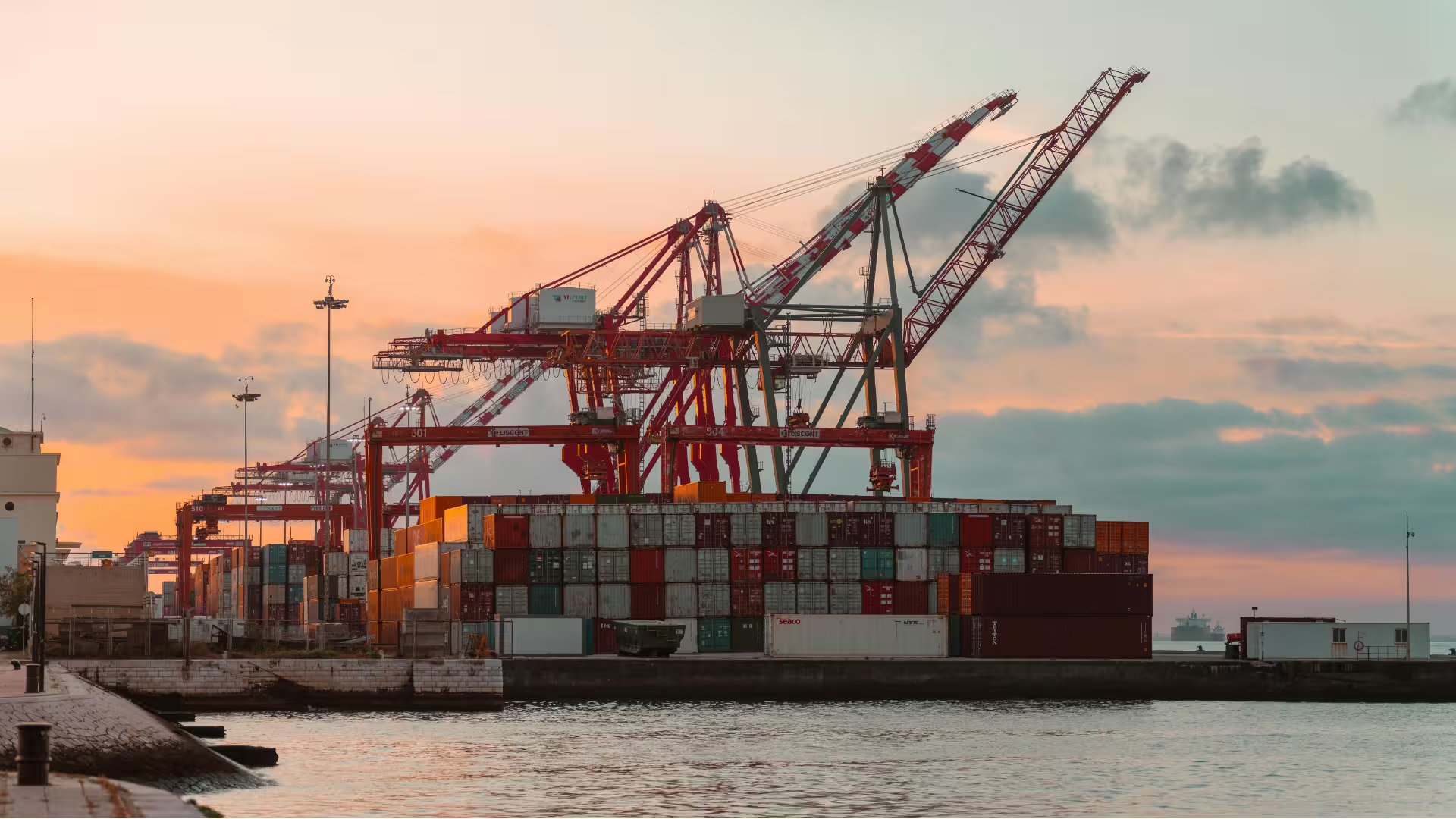
From ports to air terminals, Airscan improves the environmental conditions that shape safety, alertness, and day-to-day performance in high-intensity transport environments.
Ports and airports function as dense operational ecosystems – where industrial activity, human movement, and infrastructure performance overlap continuously across indoor, semi-enclosed, and outdoor spaces.
Within these operating ecosystems, working conditions are shaped by the by-products of daily activity – how air moves through a variety of spaces, how heat and moisture builds up, how noise and vibration travel, and how people must see, monitor, and respond in real time. Because these factors interact, issues rarely sit neatly in one category: comfort affects alertness, noise affects coordination, and air quality affects both health and error rates.
Airscan helps operators improve operating conditions by measuring emissions and driving targeted improvements across air quality, comfort, and workplace exposure.
50%
Workers regularly exposed to diesel exhaust exhibit a 20%-50% increased risk of lung cancer.
$123M
Particulate matter and VOC emissions from ships and trucks at the Port of Kaohsiung was found to create $123 million per year in health and environmental damage.
Airscan improves the conditions people work in across ports and airports by measuring, verifying, and actively shaping air, comfort, and exposure at scale – turning complex operational environments into healthier, safer, and more dependable places to work.
Ports & airports sit within dense emission environments shaped by large vehicle movements and industrial handling activities. Airscan applies high precision outdoor air quality monitoring to improve how these sites manage exposure, identify dominant pollution sources, and act with precision to create healthier woking conditions.
Measure the impact of particulate matter and key gases - including NOx, SO2, and more - across site zones, with hotspots tied to operational patterns (traffic flows, berthing activity, cargo handling). Supports targeted mitigation to reduce peak exposure in working areas.
Deploy fixed outdoor monitoring arrays -measuring PM₁, PM₂.₅, PM₁₀, NO₂, SO₂, O₃, and CO across large, complex sites - to generate continuous, comparable data across zones, shifts, and seasons, supporting long-term operational planning and exposure management.
Measure fallout of polycyclic aromatic hydrocarbons (PAHs) and heavy metals in industrial environments over time to improve understanding of exposure risks that are not captured through real-time concentration measurements alone.
Structured outdoor air quality data to support requirements linked to port-specific frameworks and conventions, including EcoPorts alignment and MARPOL-related environmental obligations.
Translate outdoor data into clear exposure profiles for different site zones and activities, supporting health protection strategies for workers operating near high-emission interfaces such as docks, loading areas, and traffic corridors.
Transport hubs operate with dense occupancy, enclosed volumes, and round-the-clock activity. Airscan’s indoor air quality monitoring improves working conditions by actively providing the foundational intelligence to mange exposure, comfort stability, and ventilation effectiveness in spaces where fatigue, error rates, and health risks rise quickly under peak load.
Continuous CO2 tracking in transit halls, control rooms, and staff areas where concentrations frequently exceed 1,000 ppm during peak flow. Data will provide the foundational layer that supports automated ventilation responses that reduce cognitive fatigue, sustain alertness, and lower error risk.
Monitor persistent VOCs associated with packaging materials adhesives, and cleaning agents common in logistics warehouses - enabling targeted source reduction and ventilation strategies that improve respiratory comfort.
Integrated tracking of humidity alongside CO2 to guide interventions that reduce dampness, microbial growth risk and "stuffy" conditions.
Front-facing, on-site IAQ monitoring dashboards to enable safety, operations, and engineering teams to act on deteriorating conditions without relying on delayed reports or indirect indicators.
Targeted, high-precision indoor air quality assessments to improve conditions in high-risk transport and logistics environments – where indoor conditions are shaped by fuel-powered equipment, dense movement, and large enclosed volumes.
Airscan offers IAQ testing to reveal these risks quickly and where they matter most. Our assessments focus on active work areas and peak conditions, providing a clear basis for corrective action – whether operational, mechanical, or procedural. This allows operators to act with confidence during audits, after incidents, or when conditions begin to affect safety and workforce reliability.
Identify priority exposure risks within complex port and logistic facilities to provide a defensible reference point for decision-making and allow operators to define where intervention is most needed.
Focused testing against WHO carbon monoxide thresholds to get quick, clear confirmation of exposure levels especially in environments where forklifts and handling equipment operate indoors.
Testing aligned with audit requirements of a variety of sector frameworks - reducing friction during inspections while ensuring corrective actions are based on measured conditions.
Rapid deployment of IAQ testing to investigate exposure risks and guide immediate response - protecting staff while minimizing disruption to operations.
Ventilation is not a background system in ports and airports. Large volumes, high ceilings, and continuous movement create airflow patterns that routinely work against both comfort and health. Airscan’s Smart Ventilation solution assesses and adjusts how air is delivered, exchanged, and controlled by using measured conditions to improve how these spaces function.
Identify vertical temperature gradients and apply ventilation strategies that redirect air into the breathing zone, reducing fatigue for ground staff while avoiding wasted heating energy.
Use real-time indicators such as CO2 and pollutant levels to adjust fresh air supply dynamically, improving indoor conditions during peaks while reducing unnecessary ventilation during low-use periods.
Monitor humidity and ventilation effectiveness in warm, humid climates to guide corrective actions that reduce dampness, support healthier air, and limit conditions associated with outbreaks and absenteeism.
Transport hubs and logistics facilities increasingly operate under formal health, safety, and asset-quality frameworks. Airscan supports certification and independent performance verification so requirements for air, light, acoustics, and comfort are realized across large, operationally complex sites.
On-site testing required for frameworks such as WELL Building Standard and BREEAM, verifying that occupied terminals, warehouses, and control spaces meet required thresholds for air quality, lighting, acoustics, and thermal conditions under peak load.
Generate defensible, third party data that supports ESG reporting related to worker health, safety, and indoor conditions - enabling operators to move beyond policy statements toward evidence-backed disclosure aligned with investor and stakeholder expectations.
Strengthen asset positioning with operators, tenants, and public authorities.
Speak with a senior member of the Airscan team about the facility you operate and the issues you’re seeing, and we’ll outline a practical path to improve operating conditions.