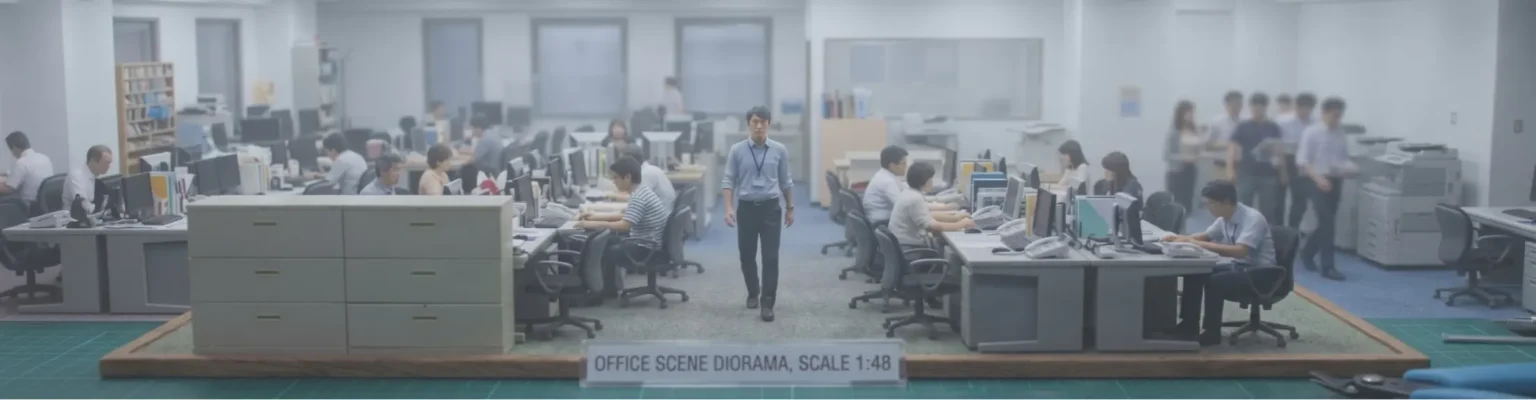
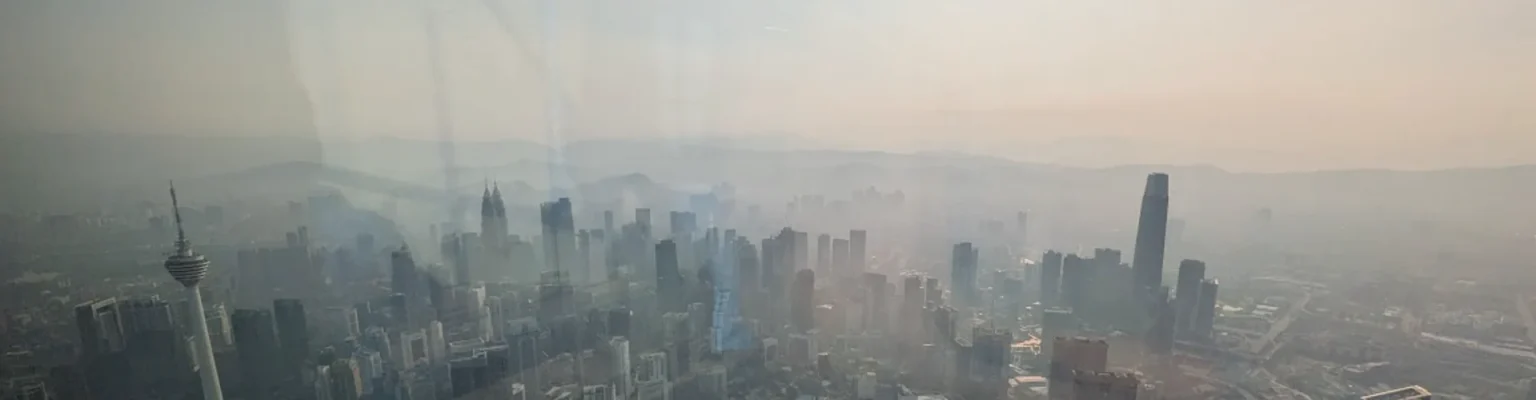
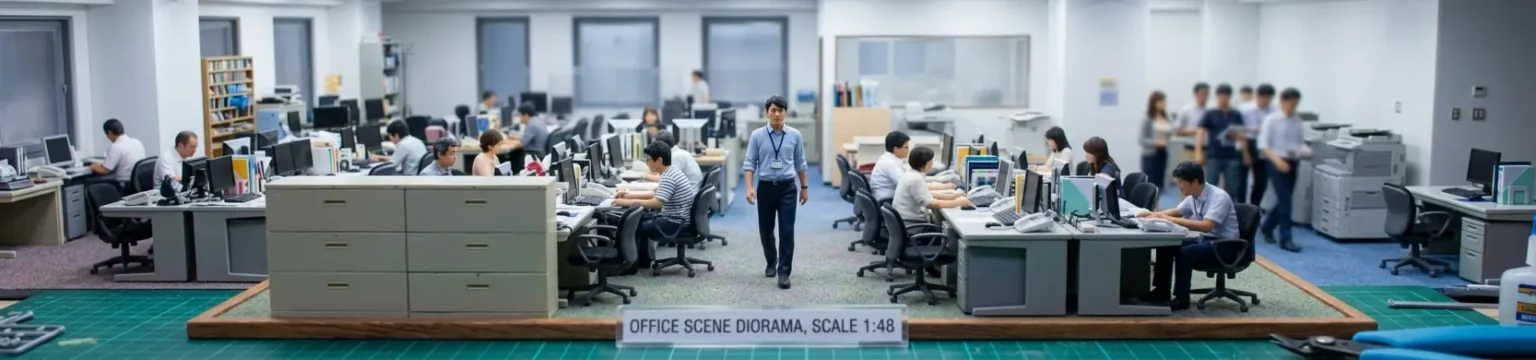
Sick Building Syndrome is a widely used term for situations where building occupants consistently experience mild, non-specific symptoms such as headaches, fatigue, irritated eyes and throats that ease once they leave the space. The World Health Organisation coined the term in 1983 in a report on how buildings affect health, and its definition remains unchanged: it’s a situation in which people inside a building suffer acute effects on their health or comfort that seem tied to the time they spend there, with no specific illness and no cause anyone can identify.
That’s the key – timing. The complaints on their own are unremarkable, a dozen everyday things from dry cough to itchy skin to dizziness and a headache that will not shift, and what turns them into a pattern is the way they only seem to occur on the premises of the building, easing over the weekend and coming back on Monday. That temporal signature is Sick Building Syndrome.
Is Sick Building Syndrome a real medical diagnosis?
The absence of a cause is the whole reason Sick Building Syndrome stands apart from other Building-Related Illnesses (BRIs), the category reserved for cases where a real, diagnosable condition traces back to something in the air. Legionnaires’ disease is the standard example, one specific pathogen breeding in one identifiable system and producing an illness you can name, test for, and treat. Sick Building Syndrome is what’s left once that kind of chain has been ruled out, exactly what makes it so awkward to pin down.
That awkwardness has kept the concept permanently unsettled in clinical and occupational-health circles, where plenty of doctors and medical bodies mostly agree that no distinct syndrome exists, in a formal, medical sense. There’s no real diagnosis for something with no fixed set of symptoms, no established mechanism, no diagnostic tests, and nothing to treat.
But no real diagnosis doesn’t mean nothing is happening. It also doesn’t mean that while something is happening, Sick Building Syndrome is the ‘lazy’ way of ascribing a cause to symptoms BEFORE actual testing, and that if you were to be thorough in your tests some specific cause will be found. Here’s why:
What actually makes a building unwell is usually: EVERYTHING
The reason a single investigation rarely turns up with a single, distinct culprit is that a sick building is usually several failures overlapping at once. Underneath most cases sits inadequate ventilation, too little outdoor air drawn in to dilute what builds up indoors, or the same stale volume pushed round and round the space. Onto that base the building layers its own emissions, formaldehyde and volatile organic compounds seeping from furniture and adhesives and paint and cleaning products, joined by dust and – wherever damp has taken hold – mould and bacteria. Outdoor pollution finishes the picture from the other side, pulled in through intakes set too near high emission areas (e.g. traffic, loading bays), so the ventilation meant to freshen a room hands its occupants a dose of the exhaust they came inside to escape.
You have to understand that each of these, the high CO2 build up, the emissions from formaldehyde, VOCs, chemicals, traffic emissions, dust, mould, funghi – the effects of exposure to each of these are slow burning, it raises inflammation, it can bring on respiratory symptoms, and over time, it raises the risk of cardiovascular issues. The cancer incidents are seen in general population studies, which appears after years of exposure but not a lot of certainty as to the single cause – as population studies go. But what happens in the interim, is that slow eating, general feeling of malaise.
When buildings fail, they usually fail at ALL or MOST of those things, because buildings haven’t been designed or managed for health and wellbeing. At the outset, it’s very hard to say the ‘thing you’re feeling’ is directly caused by traffic emissions alone, and even after testing, isolating one culprit is difficult because the effects overlap. Sick buildings suck at a lot of things. That’s exactly why the fix targets all of them at once.
Investigating Sick Building Syndrome
Having no biomarker means you don’t measure Sick Building Syndrome, you investigate with formal indoor air quality testing et surveillance de la qualité de l'air intérieur. The general steps start with a survey of occupants to establish whether a real pattern exists and where it sits, who is affected, how often, and whether complaints generally match the hours spent inside the space in question. The second is a physical examination of the building, its ventilation, the systems behind it, the materials likely to be off-gassing, the usual suspects of biological breeding grounds, and the routes that let outdoor pollution indoors.
Every region does it a little differently, but the process is generally the same, testing everything and entering a process of ruling things out. One by one. As one round of sampling on its own almost never settles on an answer, since a single snapshot of contaminant levels says nothing about why one group of people on one floor keeps feeling ill, continuous air quality monitoring is really the apex ingredient to comprehensively view what happens to air quality in each space on a minute by minute log.
Why Sick Building Syndrome may mean different things in different countries
Sick Building Syndrome is well-researched and documented across North America, Europe, and Asia, with strong clinical and field literature out of the US, Sweden, Germany, the UK, Finland and beyond. Where the regions diverge is policy. Much of the West acknowledges it and handles it through guidance and indoor air quality standards rather than naming it in law. It’s mainly across Asia that it shows up in binding policy and through IAQ laws and standards.
Malaysia bakes Sick Building Syndrome into policy. Its Industry Code of Practice (ICOP 2010) on Indoor Air Quality, issued by DOSH Malaysia, builds an occupant symptom questionnaire straight into its formal IAQ assessment methodology, so a Malaysian evaluation of IAQ records the syndrome’s symptoms next to IAQ readings for a comprehensive view of a building’s performance from both occupants and sources.
Japan’s 2003 revision to the Building Standards Act was enacted specifically to address what it calls “Sick House Syndrome”. This revision stipulates three instructions for the improvement of IAQ: prohibiting chlorpyrifos, an insecticide used in construction, restricting interior materials by their formaldehyde emission rate, and mandating mechanical ventilation in new buildings. The measures target chemical sources at the point of construction, before a building is occupied, different from how Malaysia defines the syndrome and responds to complaints in buildings already in use.
Instead of mandatory code, the UK’s Health and Safety Executive publishes the guide How to deal with sick building syndrome, which features guidance for employers, building owners and building managers to prevent the syndrome and systematically investigate it.
What every Sick Building Syndrome approach agrees on
Every framework, whichever way it lands on terminology or approach, takes as given that a space a person spends their days in can measurably shape how well they feel, which is the premise that WHO defined back in 1983. Those same frameworks, once a real problem is confirmed, converge just as reliably on the remedy, since the fix for a building making people ill has scarcely changed in decades: bring in more outside air, make sure it’s filtered and safe, cut the emission sources, remove breeding grounds, and keep the intakes clear of whatever’s bad to breathe.
For us at Airscan, we view Sick Building Syndrome as a procedural trigger. Yes, it does indeed have a very broad scope, and is rather used to describe some ambiguous negative symptoms occupants are going through. It’s also very likely, as we have often found in our work – that with proper investigations, deep and thorough testing – there is indeed a specific cause, or multiple causes. Sick Building Syndrome is the most effective way to describe the effect of buildings actually affecting people AND HOW they affect people. And when we identify the emergence of these general symptoms, Sick Building Syndrome isn’t a diagnosis in the sense that there’s a treatment for it, but it should be a TRIGGER for businesses, owners, and tenants alike to investigate further and start ruling out the usual suspects in their built environment.
The one positive note in all of this is that while buildings haven’t traditionally been built or managed to be conducive to health and wellbeing – the focus for decades was on safety and energy consumption – there is a growing wave, a trend where people are starting to look at the built environment through the lens of health and wellbeing. Airscan is indeed part of – and a direct beneficiary – of this new wave of a much larger industry push, with academicians and researchers driving new studies – our Head of Indoor Air Quality in Malaysia, Syida Nazri, is a Doctoral candidate with published research. Tenants are demanding better spaces. Owners are noticing higher asset values and yields. Companies are looking for better productivity and retention. Governments and organisational bodies are forming new standards and frameworks and policies, with consultants driving these frameworks. And there’s better accessibility to tools and standards where previously, this topic might have been non-existent in some markets. Awareness is spreading. The world is indeed moving towards built environments designed, evaluated, monitored, and managed with a fine-tooth for the wellbeing of the people inside them.
If you’re in Asia or Europe and interested to explore how to test and optimize your built environment for occupant health and wellbeing, do get in touch with our specialist teams.