People spend more than 85% of their time indoors—close to 20 hours a day. As that reality has become clearer, attention has shifted from how buildings look to how they perform. Indoor air quality, lighting quality and intensity, thermal comfort, and acoustic conditions have moved from secondary considerations to core determinants of health, wellbeing, and productivity.
These conditions do more than influence comfort. They affect concentration, cognitive performance, and the day-to-day experience of occupants. For developers and building owners, sustainability increasingly means creating indoor environments that actively support human function, rather than simply reducing environmental impact.
This shift has driven growing demand for green building certifications such as WELL, BREEAM, and LEED. While these frameworks share common objectives, each applies distinct methodologies and performance thresholds. Understanding where they differ—and where they overlap—is essential for achieving certification efficiently and credibly.
Green building performance verification
Although WELL, BREEAM, and LEED assess many of the same environmental parameters, their requirements and evidence structures are not interchangeable by default. Performance must be demonstrated against specific criteria, often through on-site testing, laboratory analysis, and documented verification.
Rather than treating certification as a documentation exercise, high-performing projects assess environmental conditions as they operate in reality. Performance verification focuses on what occupants actually experience, not what design intent assumes.
WELL Certification
WELL Certification focuses explicitly on health and wellbeing, addressing both physical and mental dimensions of indoor environments. Its scope extends beyond traditional building metrics to include air and water quality, lighting, thermal and acoustic comfort, nourishment strategies, and factors that support cognitive and psychological wellbeing.
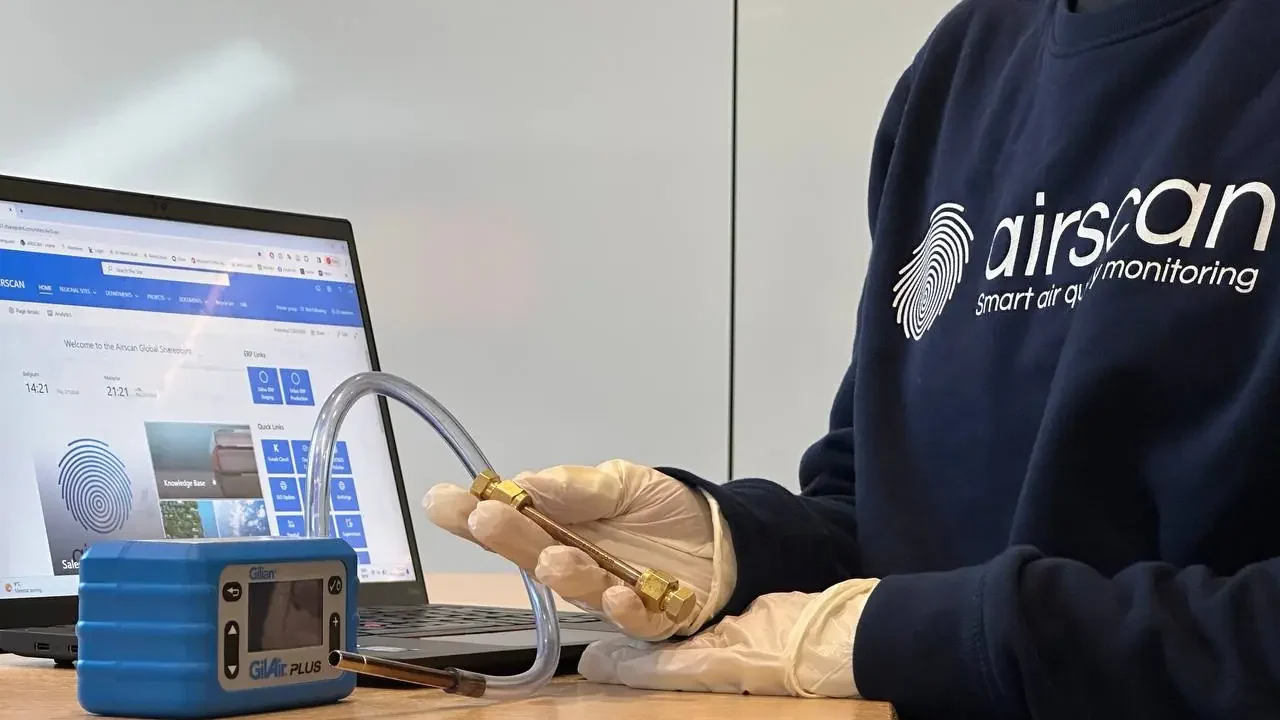
Airscan is an official WELL Performance Verification Organisation approved by the International WELL Building Institute, operating across the Benelux and South-East Asia regions. Its team of Performance Testing Agents and WELL Accredited Professionals supports projects through post-construction performance verification, annual resubmittals, and the ongoing maintenance of certification.
The WELL features that require performance verification include:
- Indoor air quality
- Water quality management
- Lighting measurements
- Thermal comfort
- Acoustic comfort
These assessments ensure that health-focused design strategies translate into measurable outcomes for occupants.
BREEAM
BREEAM (Building Research Establishment Environmental Assessment Method) is one of the world’s most widely adopted sustainability assessment methods for buildings, infrastructure, and master-planning projects. It addresses environmental performance across the full lifecycle of a building, from design through operation.
Its evaluation framework spans energy use, health and wellbeing, materials, waste, water, pollution, transport, land use, ecology, and management processes. Certification rewards not only efficient systems, but integrated decision-making across disciplines.
Airscan supports BREEAM-targeted projects through dynamic indoor air quality simulations during the design phase, validating material selection, ventilation strategies, and predicted indoor conditions. Post-construction indoor air quality testing includes formaldehyde and total volatile organic compounds, conducted in accordance with ISO 16000-3 and ISO 16000-5. Acoustic performance validation covers noise levels, sound insulation, and reverberation time.
LEED
LEED (Leadership in Energy and Environmental Design), developed by the U.S. Green Building Council, is a globally recognised framework for sustainable building design and operation. Together with BREEAM, it is one of the most widely used green building rating systems worldwide.
Airscan supports LEED certification through post-construction indoor air quality testing, including carbon dioxide (CO₂), particulate matter (PM₂.₅ and PM₁₀), ozone (O₃), carbon monoxide (CO), formaldehyde, and total volatile organic compounds. Additional support includes the development of indoor air quality management plans, ventilation optimisation, and sensor-based technologies for continuous monitoring of air quality and comfort parameters.
Conclusion
Although WELL, BREEAM, and LEED differ in structure and emphasis, their performance requirements overlap substantially. Results obtained for one certification can often be reused for another. For example, VOC and formaldehyde measurements can satisfy evidence requirements across all three schemes when conducted correctly.
Identifying these crosswalk opportunities reduces redundant testing and optimises certification costs. By approaching certification strategically, environmental performance can be verified once and applied across multiple frameworks without compromising rigour.