By Fatin Syazana, Malaysia Country Manager, Airscan
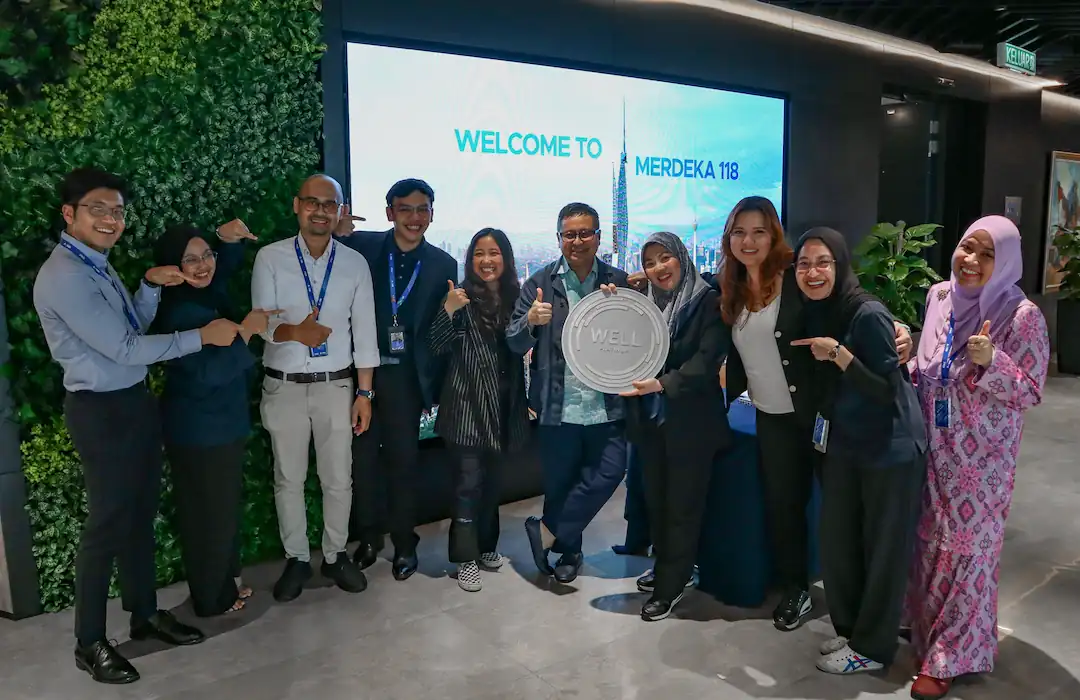
Sitting in a ceremony hall watching Permodalan Nasional Berhad receive two WELL Platinum plaques for Merdeka 118, what struck me wasn’t the scale of the project itself. It was who else was in the room. Reps from International WELL Building Institute (IWBI) and Malaysia’s Department of Occupational Health and Safety (DOSH). Merdeka 118 tenants. Prospective tenants. People who five years ago wouldn’t have known what WELL was, now watching the tallest WELL Platinum-certified building in the world get recognised, and paying close attention.
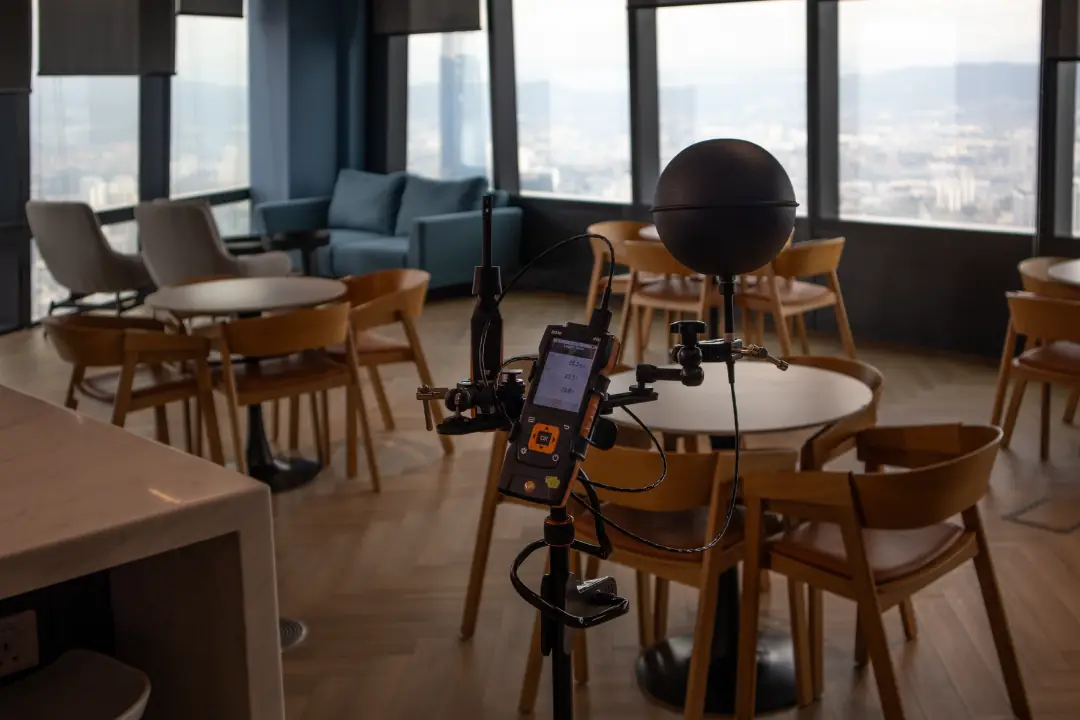
Airscan was the WELL Performance Testing Agent on the project, and our colleague Adyl Anvarov, Air Quality Engineer and WELL AP & PTA, spoke on the ceremony’s panel about the growth of WELL in the region.
A month out from the ceremony, I’ve been thinking about what WELL Certification at this scale actually shifts for the region.
WELL growth in Asia
With Merdeka 118, the APAC region will have surpassed 100 million square meters of WELL-engaged space. India, Thailand, and Hong Kong have all entered the global top 10 performing markets for WELL Certification. Vietnam recently recorded its first WELL Gold certification with Standard Chartered’s Capitol Place in Hanoi. The Philippines landed its first WELL Platinum for Ayala Corporation’s headquarters in Makati City in November 2025. From our own count, Singapore has 70+ WELL projects certified at Platinum, Gold and Health-Safety Rated. Major portfolio holders like CapitaLand are adopting WELL at Scale, committing to the standard across their holdings rather than treating certification as a one-off exercise.
The financial case matches the adoption numbers. Healthy, certified buildings command rent premiums of 4 to 7%, et over 60% of APAC office occupiers now say they’d either pay more for sustainable building features or reject buildings that lack them. At that level of tenant demand, owners without environmental quality credentials aren’t just losing market opportunity. They’re losing deals.
Capital is moving in the same direction. Roughly 58% of investors in a recent survey said they intend to retrofit existing buildings for energy efficiency and occupant health rather than acquire new ones. Environmental and wellness standards are being mapped against the ASEAN Taxonomy for Sustainable Finance, opening a direct channel for institutional capital into projects built around these outcomes.
WELL’s practical barriers in Asia
For years, WELL experienced classic teething problems of any new standard finding its footing in a new region. The standard’s performance verification process is rigorous, which is a big part of why the certification carries the weight it does. But rigorous verification needs highly qualified people to carry it out – the APs and PTAs of WELL.
In the earliest stages, there weren’t enough projects in any single Asian market to sustain a local practitioner base. You’d get a flagship project in Singapore, another in Hong Kong, but you can’t build a practice on one certification every eighteen months. So developers who wanted WELL either brought in expensive foreign expertise or decided it wasn’t worth the trouble. The low practitioner base meant fees that reflected scarcity rather than the actual complexity of the work. And this cycle fed itself. For most developers outside of trophy projects, WELL was prohibitively expensive, and low adoption meant low awareness.
What moved WELL past that early phase was demand building from several directions. Top companies constant demand for the best in class led to a push in expectation for high quality standards in the office environment. And that expectation trickled down to their landlords.
ESG reporting added a different kind of pressure. Landlords and developers who’d never thought about indoor environmental quality now needed to demonstrate measurable performance against recognised standards in their sustainability reports. WELL gave them something concrete to point to. Not a vague commitment to sustainability, an actual third-party-verified certification. When your investors or board are asking “what are we doing about the S in ESG”, WELL is a very credible answer.
Then anchor tenants in major developments started writing WELL into lease conditions, and once that happened, you get building owners pursuing certification regardless of occupant health. It became crucial to landing premium tenants.
Together, these three forces generated enough project volume that practitioners could finally build sustainable local practices. Airscan’s own growth follows the same arc: we started in air quality testing and monitoring before performance verification and green building consulting emerged as the market for it grew. It was a natural extension of work we already did.
More local practitioners meant lower costs, faster timelines, and less friction for the next developer considering WELL. That’s the market Merdeka 118 arrived into.
How Merdeka 118 changes the equation
Merdeka 118 changes who’s paying attention. Every major developer in the region now knows that a project of this scale and complexity – 118 floors, mixed-use, one of the tallest buildings in the world – can meet WELL Platinum. The scale is the proof of concept and it’s been demonstrated publicly, in their market, by one of their peers. When an organisation like PNB – a major national investment institution – commits to WELL Platinum and achieves it, other owners can point to Merdeka 118 internally when making the case, “PNB did it at 118. We can certainly do it at 40.”
But the PNB story is worth sitting with for a moment, because it tells you something about where WELL Certification works best. From a year working alongside the organisation, what stayed with me was how deeply occupant wellbeing was already embedded in PNB before any certification was on the table. They even had two in-house psychologists for employee health long before we came into the picture. The certification gave structure and external recognition to something they already believed in and were actively pursuing.
I think that’s the distinction that matters: WELL is rigorous. It’s hard to achieve. If the only goal is a plaque in the lobby and a few news stories, the cost will always feel disproportionate. For developers who care and believe in the outcome – of healthier occupants and buildings that perform better for the people inside – WELL gives them a way to demonstrate this commitment, to tenants, to investors, to the market.
Where WELL goes from here
At Airscan, the tenor of certification des bâtiments écologiques conversations we’re having with clients has been shifting. A few years ago, our meetings tended to be about what WELL is, what it measures, why it matters. Today, clients come to us already knowing. They want to talk about timelines, costs, what level to target, how to sequence it across a portfolio. That’s indication that the education phase in this market is closing. What follows is the next wave of adoption – developers pursuing WELL because their peers already have, because tenants are asking for it, because investors expect it.
One detail from the ceremony that still stays with me: the presence of senior DOSH representatives, the blue-chip tenants in the room, that’s WELL crossing over into the mainstream real estate and regulatory conversation. When occupational health officials attend a WELL ceremony, it signals something about where policy alignment may follow.
As Minjia Yang, IWBI’s Vice President and Head of Sustainable Finance, put it during the ceremony: “This achievement is a statement of what we value as a society, and how we choose to build for the future.” For developers across the Southeast Asia, the choice to build healthier is getting easier to make.