Airscan helps healthcare organizations create environments that reduce infection risk, support clinical teams, and meet rising regulatory and sustainability expectations.
Healthcare facilities are essentially small cities. Hundreds of occupants. Interdependent systems. Clinical zones, support spaces, public areas, all under constant operational pressure to support life. In this environment, infection control, thermal stability, airflow, acoustics, lighting, and energy demand all coexist with little margin for error. A single fault – an unbalanced vent, a drifting pressure zone, a concealed spot of moisture – can escalate rapidly into system-wide failure in settings where no amount of disruption should be tolerated.
The highest environmental quality standards must be upheld in healthcare. Airflow must hold across spaces in varying acuity. Humidity and temperature must stay within limits. Deviations must be identified early, contained locally, and corrected without interrupting care. Airscan enforces the environmental control layer healthcare facilities require – where conditions are observed in real time and corrected before they escalate into clinical risk and disruption.
$28B
Direct cost of HAIs. Broader societal cost - including lost productivity - exceeds $200B annually.
21%
of 21.8 million annual asthma cases can be attributed to indoor dampness and mould growth in buildings.
Airscan helps healthcare facilities protect its patients, clinicians, and the continuity of care by delivering environmental quality solutions that span continuous measurement, system intelligence, and targeted intervention.
Real-time humidity and temperature monitoring to maintain conditions that limit viral transmission, suppress microbial growth.
Thermal comfort intelligence to reduce staff fatigue and improve patient recovery without manual recalibration or constant human intervention.
Airscan monitors airborne conditions in high-acuity spaces to detect drift, episodic contamination, and pressure instability before clinical exposure occurs. Performance is tracked as it operates, not inferred from design intent.
Ventilation rate automation in response to measured indicators of airborne risk, supporting high air-change requirements when required and stabilizing conditions across adjacent spaces.
Smart control logic to manage dew point and discharge temperatures to prevent condensation while accomodating clinical temperature demands.
Automated environmental adjustments reduce operational burden on facilities team by minimizing manual overrides and preventing cumulative system error.
Establish real-world environmental performance across facility - identifying gaps and potential risk profiles, including for high-risk and sensitive clinical areas.
Assessing airborne biological and chemical contaminants - including mold, fungal spores, and healthcare-specific chemical exposures - across clinical environments.
Helping healthcare facilities minimize infection risk and operational disruption during renovation and construction activities through targeted air quality testing to detect leftover residues.
Applying testing protocols tailored to the regulatory frameworks, environmental conditions, and healthcare requirements of your region - ensuring results are relevant, comparable, and actionable within the operating context.
Verification for specialized spaces - such as Airborne Infection Isolation (AII) and Protective Environment (PE) rooms - ensuring they meet required biocontainment, airflow, and pressure performance criteria.
Independent audit support and documentation aligned with unified Physical Environment standards, supporting accreditation reviews and regulatory inspections.
Validate environmental and energy performance requirements required to meet net-zero carbon objectives in healthcare facilities, balancing clinical requirements with sustainability-centric certification frameworks.
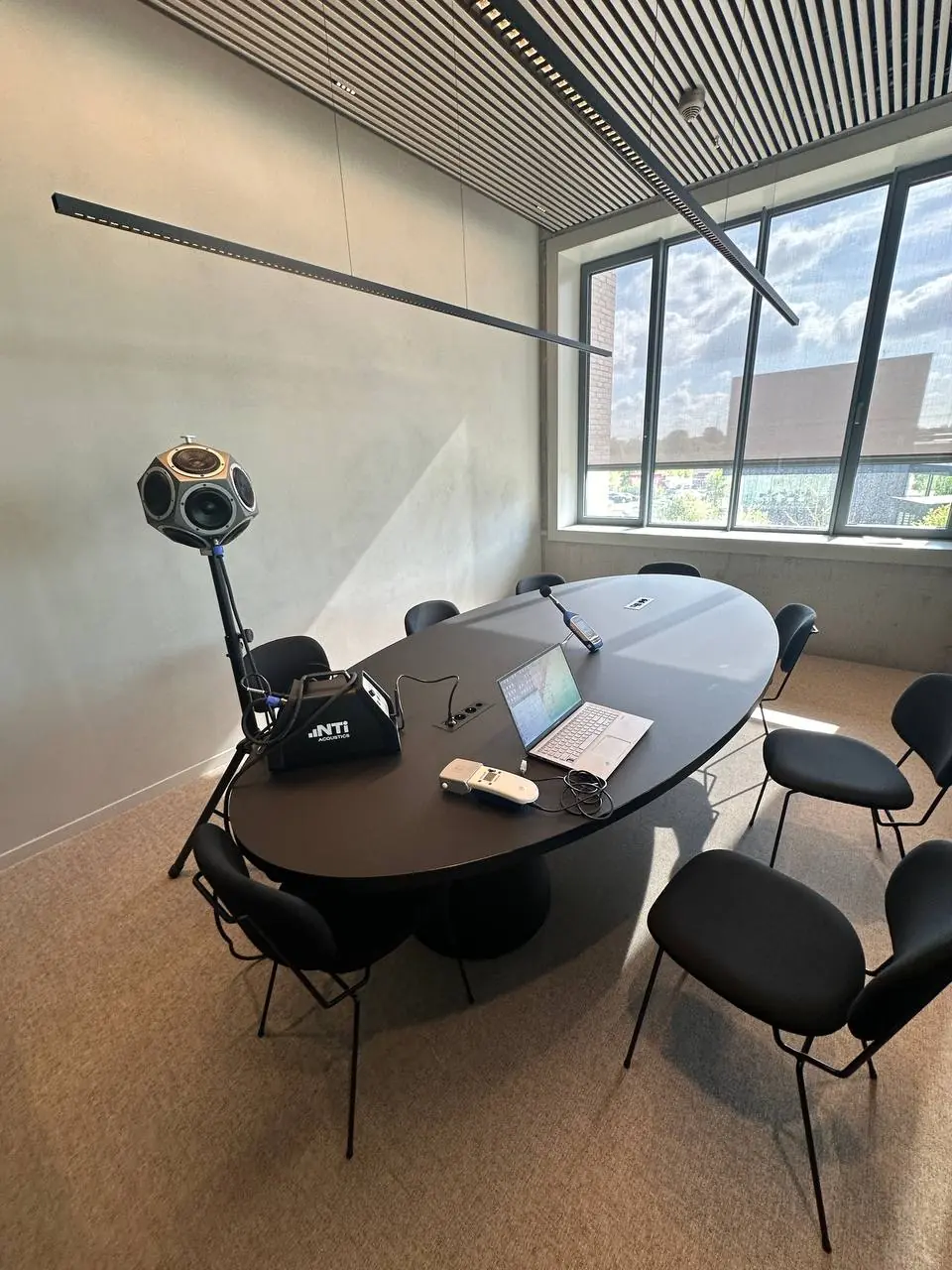
Verifying effectiveness of sensory comfort strategies - including acoustics, thermal comfort, and biophilic design - shown to influence patient recovery and staff performance.
Mapping the effectiveness of building envelopes and filtration strategies by assessing how outdoor pollution activity - from traffic, emergency vehicle activity, and surrounding infrastructure - translates into indoor exposure.
Integrating outdoor air quality data with Smart Ventilation systems to automatically adjust air intake, filtration, and operating modes depending on outdoor events.
Schedule a short scoping call with Airscan to review your facility type, critical spaces, and current challenges.