The LEED (Leadership in Energy and Environmental Design) certification system—widely recognised as a global benchmark for sustainable building design—has introduced significant updates in its latest version, LEED v5.
A central focus of this release is the strengthening of air quality requirements, reflecting the growing recognition of both indoor and outdoor air quality as critical components of healthy, high-performing buildings. The Airscan team has prepared a summary of the key air-quality-related updates introduced under the new LEED v5 protocol.
Fundamental air quality
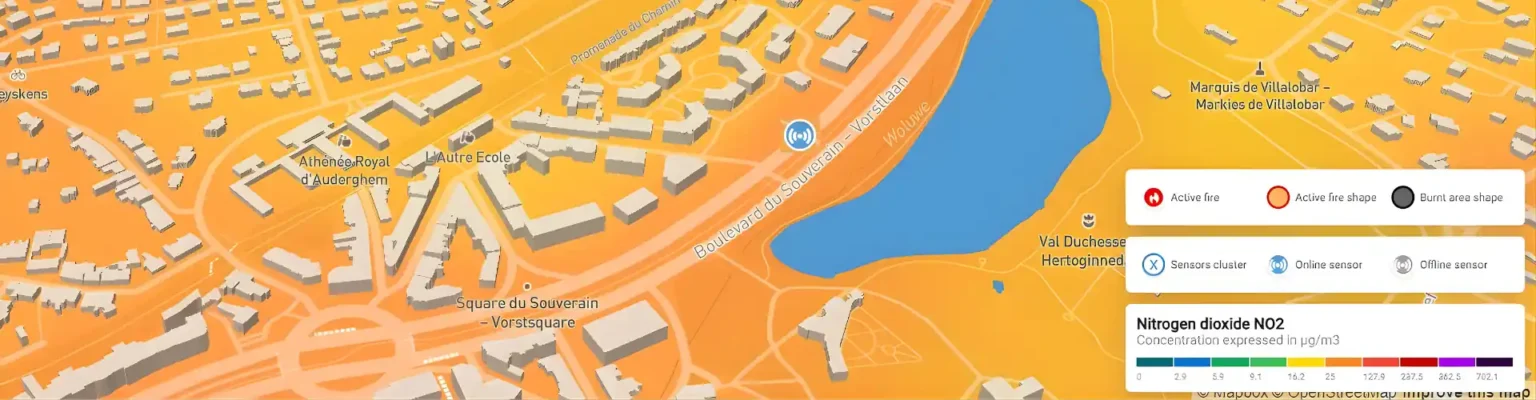
The new LEED v5 protocol places increased emphasis on ventilation and the assessment of ambient outdoor air quality around project sites. This is intended to reduce the risk of outdoor pollution infiltrating indoor environments—particularly in urban or industrial contexts.
To address these risks, LEED v5 introduces a Fundamental Air Quality Assessment prerequisite, which includes:
- Outdoor air quality assessment in accordance with ASHRAE Standard 62.1-2022
- Implementation of MERV 13 filter media or equivalent solutions
- Installation of stand-alone in-room air purification systems where required
- Provision of outdoor airflow meters for mechanical ventilation systems with air intakes exceeding 472 L/s
Air quality testing and monitoring
LEED v5 allows projects to earn up to two additional points by implementing a structured air quality testing and monitoring management plan. This assessment focuses on two main pollutant groups.
Particulate matter and inorganic gases
This component of post-construction indoor air quality assessment covers measurements of:
- Carbon monoxide (CO)
- Ozone (O₃)
- Particulate matter (PM₂.₅ and PM₁₀)
Measurements may be carried out using either laboratory-based methods or direct-reading instruments, in accordance with the specifications outlined below.
|
Contaminant (CAS#) |
Concentration Limit (µg/m3) |
Allowed Test Methods (laboratory based) |
Direct reading instrument minimum specifications |
|
Carbon Monoxide (CO) |
9 ppm no more than 2 ppm above outdoor levels |
|
Direct calibrated electrochemical instrument with accuracy of +/- 3% of reading and resolution of 0.1 ppm NDIR CO Sensors with accuracy of 1% of 10 ppm full scale and display resolution of less than 0.1ppm |
|
Particulate Matter (PM2.5 and PM10) |
PM10: 50 μg/m3 PM2.5: 12 μg/m3 |
IP 10A |
Accuracy (+/-): Greater of 5 μg/m3 or 20% of reading Resolution (+/-): 5 μg/m3 |
|
Ozone (O3) |
0.07 ppm OR 0.01 ppm for projects pursuing EQc: Enhanced Air Quality Option 1 Path 2 |
ISO 13964 ASTM D5149 -– 02 EPA designated methods for Ozone |
Monitoring device with accuracy greater of 5 ppb or 20% of reading and resolution (5 min average data) +/- 5 ppb |
Volatile organic compounds (VOCs)
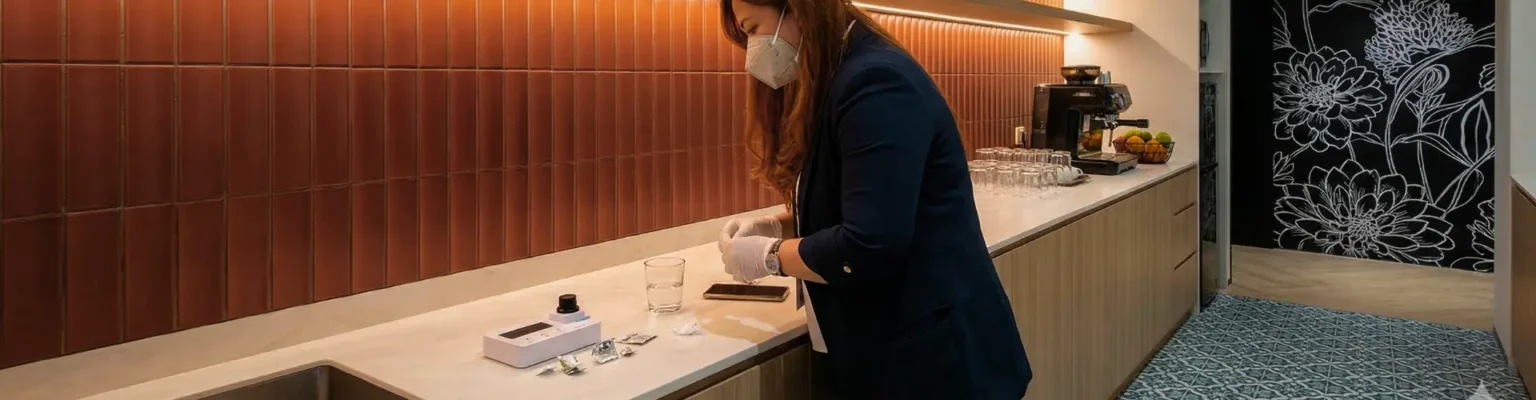
The second component of indoor air quality testing focuses on total and individual volatile organic compounds. Sampling and analysis must be performed by laboratories accredited to ISO/IEC 17025.
The table below lists the individual VOCs to be tested under LEED v5, along with their concentration limits and accepted analytical methods.
|
Contaminant (CAS#) |
Concentration Limit (µg/m3) |
Allowed Test Methods |
|
Formaldehyde 50-00-0 |
20 µg/m3 (16 ppb) |
ISO 16000-3, 4; EPA TO-11a, EPA comp. IP-6A ASTM D5197-16 |
|
Acetaldehyde 75-07-0 |
140 µg/m3 |
|
|
Benzene 71-43-2 |
3 µg/m3 |
ISO 16000-6 EPA IP-1, EPA TO-17, EPA TO-15 ISO 16017-1, 2; ASTM D6196-15 |
|
Hexane (n-) 110-54-3 |
7000 µg/m3 |
|
|
Naphthalene 91-20-3 |
9 µg/m3 |
|
|
Phenol 108-95-2 |
200 µg/m3 |
|
|
Styrene 100-42-5 |
900 µg/m3 |
|
|
Tetrachloroethylene 127-18-4 |
35 µg/m3 |
|
|
Toluene 108-88-3 |
300 µg/m3 |
|
|
Vinyl acetate 108-05-4 |
200 µg/m3 |
|
|
Dichlorobenzene (1,4-) 106-46-7 |
800 µg/m3 |
|
|
Xylenes-total 108-38-3, 95-47-6, and 106-42-3 |
700 µg/m3 |
Continuous indoor air monitoring
One of the most notable updates in LEED v5 is the introduction of continuous indoor air quality monitoring as a recognised pathway. Permanent monitoring systems are expected to measure at least:
- Carbon dioxide (CO₂)
- Particulate matter (PM₂.₅)
- Total volatile organic compounds (TVOCs)
- Comfort parameters (temperature and relative humidity)
While the protocol formally recognises continuous monitoring, it currently provides limited guidance on sensor specifications, sampling frequency, or how collected data should be used operationally—an area the Airscan team expects to be further clarified in future releases.
Enhanced air quality
Beyond the fundamental requirements, LEED v5 offers additional points for projects that meet stricter pollutant thresholds for selected compounds, including particulate matter, ozone, and formaldehyde.
|
Design Compound or PM2.5 |
Enhanced IAQP Design Limit* |
|
Particulate Matter (PM2.5) |
10 µg/m³ |
|
Formaldehyde (CHOH) |
20 µg/m³ |
|
Ozone (O3) |
10 ppb |
The updated guidebook also specifies minimum requirements for sampling density. The number of sampling points required increases with total occupied floor area, reinforcing the need for a structured sampling strategy before initiating an indoor air quality management plan.
|
Total Occupied Floor Area, (m2) |
Number of measurements |
|
≤ 500 |
1 |
|
> 500 and ≤1500 |
2 |
|
> 1500 and ≤2,500 |
3 |
|
> 2,500 and ≤ 20,000 |
4 plus one additional measurement per each 2500 m2 |
|
>20,000 |
10 plus one additional measurement per each 500m2 |
Conclusion
LEED v5 introduces meaningful changes to air quality requirements, with a stronger focus on filtration, continuous monitoring, and rigorous testing of indoor pollutants. These updates reflect the growing importance of air quality in delivering healthier and more sustainable buildings.
While the new framework represents a clear step forward, further clarification—particularly around sensor performance and data management—would strengthen its practical implementation. As the industry continues to prioritise health and wellbeing, LEED v5 sets an important foundation for healthier, smarter, and more resilient buildings.