Performance verification represents the final and decisive stage of a green building certification process. It is the point at which project teams learn whether the systems and solutions implemented during design and construction are performing as intended.
Given the importance of this phase, Airscan has prepared a practical checklist to help project teams achieve green building certification and maximise their final score.
1. Select the Right Performance Verification Body
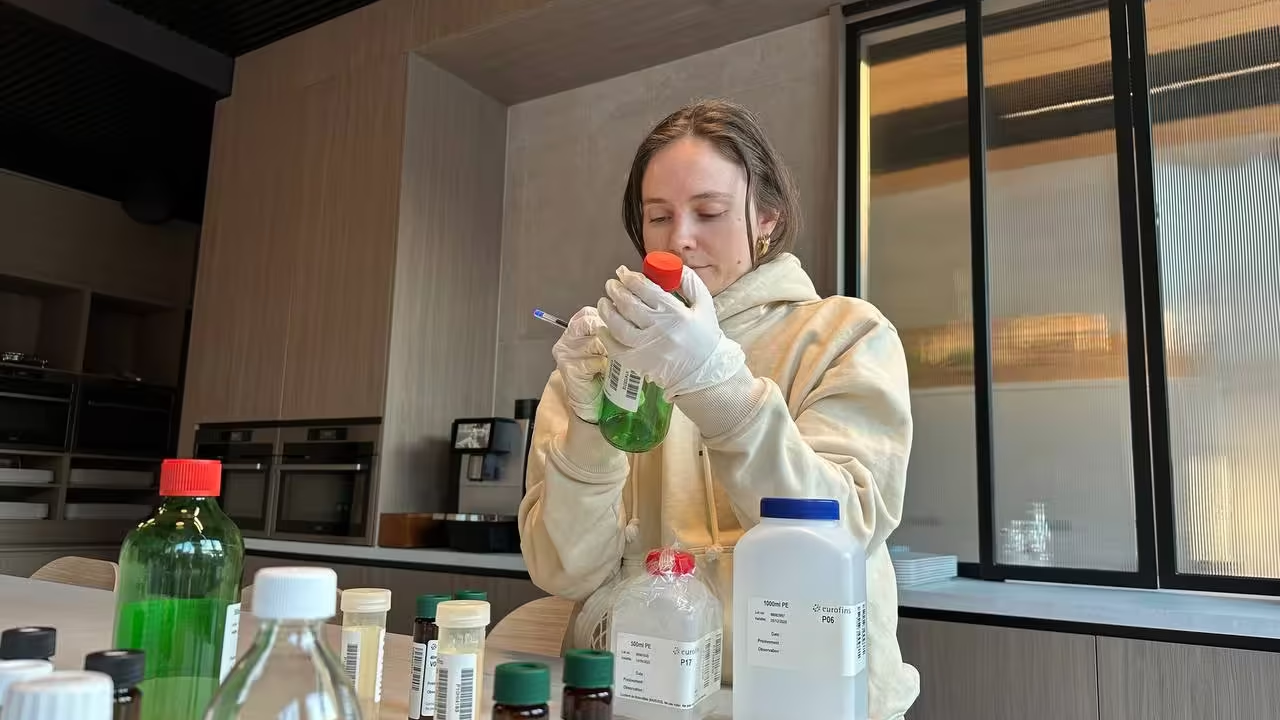
The certification outcome is directly linked to the organisation responsible for conducting audits and on-site performance tests.
Key criteria when selecting a performance verification body include the presence of relevant certifications and authorisations, technical expertise, credibility, and proven experience. Before signing a contract, project teams should verify that all tests will be conducted in accordance with the latest standards and request confirmation of all required licenses and accreditations.
Working with an assessment company located close to the project site can also reduce environmental impact, improve efficiency, and often result in lower costs.

2. Check the Possibility of Performing Joint Tests
Many sustainable building projects pursue more than one certification simultaneously. It is common, for example, for developments to target both BREEAM and WELL certification.
In such cases, selecting an assessment body capable of conducting tests for multiple certification schemes can significantly reduce risk and optimise certification-related costs. Several performance tests can be completed in parallel across different standards, as outlined in guidance published by the WELL Building Institute.
3. Allow Sufficient Time Between Construction Completion and Certification
Construction projects often operate under tight deadlines, particularly at the end of a build. Building owners or tenants may need to move in immediately, or subsequent fit-out works may be scheduled to begin.
Conducting performance verification tests immediately after construction increases the risk of failure, as systems may not yet be fully stabilised or optimised. It is strongly recommended to allocate at least one week for commissioning and internal validation before inviting assessors to perform certification tests. This allows project teams to confirm that all systems are functioning correctly under real operating conditions.
4. Complete All Works—Indoors and Outdoors
While the completion of internal construction works is widely recognised as essential for successful performance testing, the impact of external works is often underestimated.
Ongoing landscaping, paving, or site fencing activities can negatively affect indoor air quality and acoustic performance results. Ensuring that both indoor and outdoor works are completed before certification testing helps avoid unnecessary complications and test failures.
Conclusion
Achieving green building certification requires careful coordination and disciplined execution. By selecting a qualified performance verification body, combining assessments for multiple certifications, allowing time for commissioning and validation, and ensuring that all indoor and outdoor works are complete, project teams can significantly improve their chances of achieving the highest possible score.
Following this checklist—and working with Airscan—supports a smoother certification process and helps deliver buildings that meet rigorous performance standards in practice, not just on paper.