In 2013, 9-year-old Ella from London died from an asthma attack caused by traffic-related air pollution — becoming the first person with air pollution officially listed as a cause of death. Her story raised awareness of the severe health impacts of urban pollution, especially on children.
Sadly, in cities like Brussels, thousands of kids face similar risks every day due to high traffic and poor air quality.
How are children exposed to air pollution at school?
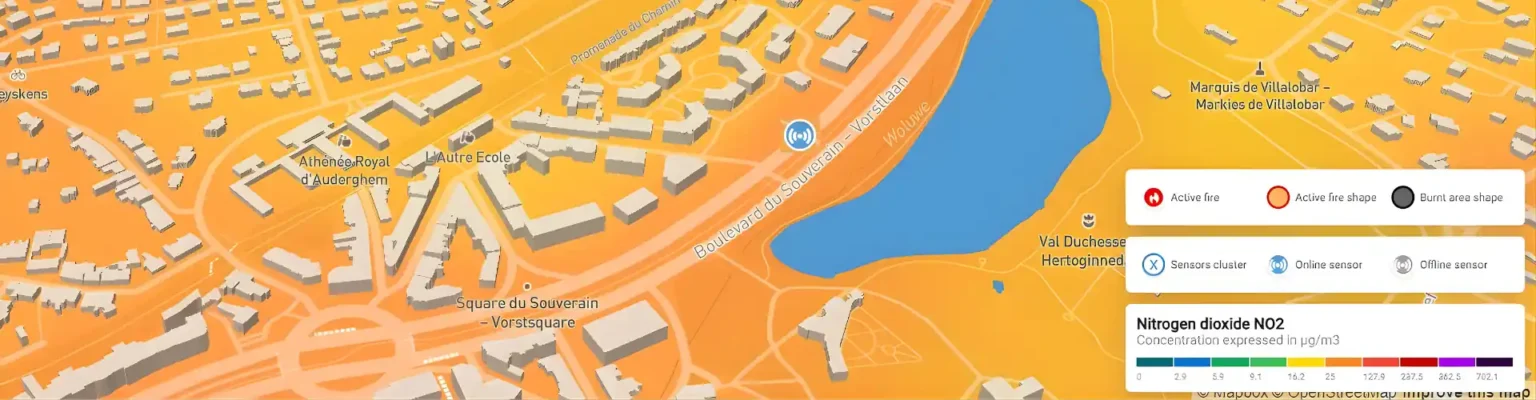
In a city, there exist different sources of pollution, but traffic is one of the principal ones. Pollution coming from traffic is a complex mix of dangerous and prevalent substances.
Cars, buses, or trucks release pollutants such as:
- Nitrogen dioxide (NO2)
- Fine particulate matter (PM2.5)
- Carbon monoxide
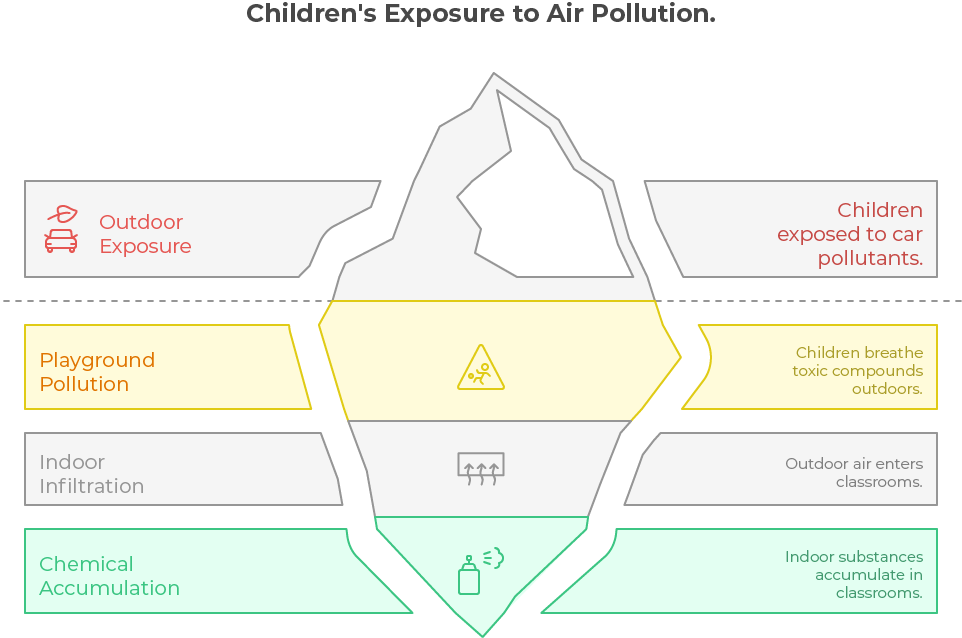
Globally, kids are exposed unconsciously through their whole day at school. This invisible exposure could cause serious health issues and could in some cases, like Ella’s, be fatal for our children.
Why are children more at risk?
For several different reasons, children are more vulnerable than adults to the negative effects of air pollution:
- Physiology: They breathe faster, inhaling more air—and consequently more pollutants—in proportion to their body weight.
- Development: Their metabolism is still developing and is weaker. Early exposure to dangerous substances can have long-term effects on their immune and respiratory systems.
According to some research, extended exposure to elevated NO2 levels can contribute to the development of different health issues, especially respiratory infections and asthma.
Other studies showed that exposure to particulate matter (PM) can be the source of cardiovascular diseases or even cancer. When particles are inhaled, they can be adsorbed by the tissues and can enter deep into the lungs or even the bloodstream. For children growing up in polluted urban environments, these health risks can have lifelong consequences.
Facts and Figures: The Situation in Brussels
Brussels is one of the most densely populated areas in Belgium and experiences particularly heavy traffic during peak hours. It is estimated that nearly 500,000 cars circulate daily in the Brussels-Capital Region, which accounts for about 8% of all vehicles in the country.
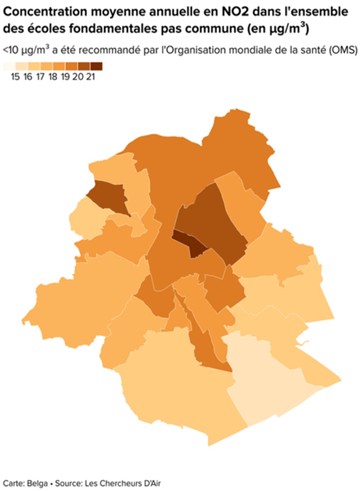
Many schools are located near main roads or intersections, and parents often drive their children to school, bringing pollution right to school entrances. A 2022 study conducted by Les Chercheurs d’Air, Brussels Environment, and Bloomberg Philanthropies showed that:
- 622 schools exceed the WHO NO₂ limit (10 μg/m³).
- 121 schools (~20%) have levels 2–3× higher than this limit.
This implies that kids are exposed to dangerous pollution in settings that are supposed to be safe and nurturing during some of the most important times of the day—such as when they go to school in the morning and when they leave in the afternoon.
What is being done?
Faced with this challenge and with an aim of reducing the pollution in the city, Brussels has implemented several strategies to improve urban air quality.
Low Emission Zone (LEZ)
The LEZ limits the circulation of the most polluting vehicles, especially older diesel cars. Since its introduction, NO₂ levels on major roads have fallen by around 30%, showing that such measures can be effective.
School Streets
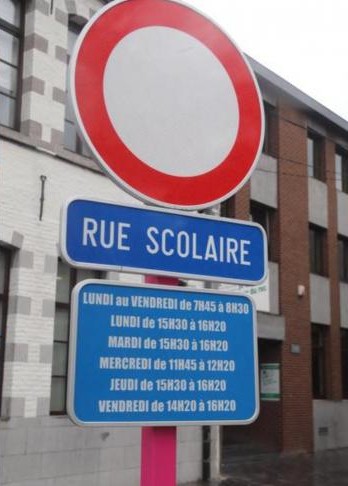
“School streets” that close to car traffic during drop-off and pick-up times — and sometimes all day — create safer, quieter, and cleaner spaces for children.
- Currently, only 9% of Brussels schools benefit from this system, even though up to 70% could adopt it with proper support.
- These zones also help reduce NO₂ and PM2.5 by up to 30%.
Urban Greening
Planting trees, hedges, and green walls helps filter pollutants, cool urban areas, and absorb CO₂. While not a complete solution, greening initiatives make a meaningful contribution to healthier school environments.
What can you do?
Although changing policies is crucial, you can also help create cleaner air around schools!
- Active Transportation: Biking or walking to school lowers emissions and traffic while also improving kids’ health by encouraging physical activity.
- Carpooling: Sharing rides to school reduces the number of vehicles on the road, lowering traffic congestion and cutting air pollution, while still getting kids safely to class.
- Advocate for Legislation: Call for more school streets, more stringent LEZ regulations, and government funding for cleaner infrastructure.
- Educate Kids: Increasing awareness in schools contributes to the development of a generation that is environmentally conscious and takes action.
Air pollution is an invisible enemy which could affect our children’s health in the long-term. Ella’s story is just one example of how severe the situation can become. By taking action, we can create a healthier and safer environment for our children.
How we help: The Clean Air for Schools Program
Through the Clean Air for Schools program, Airscan delivers an end‑to‑end pathway from diagnosis to measurable improvement tailored to school environments.
The A.I.R Approach
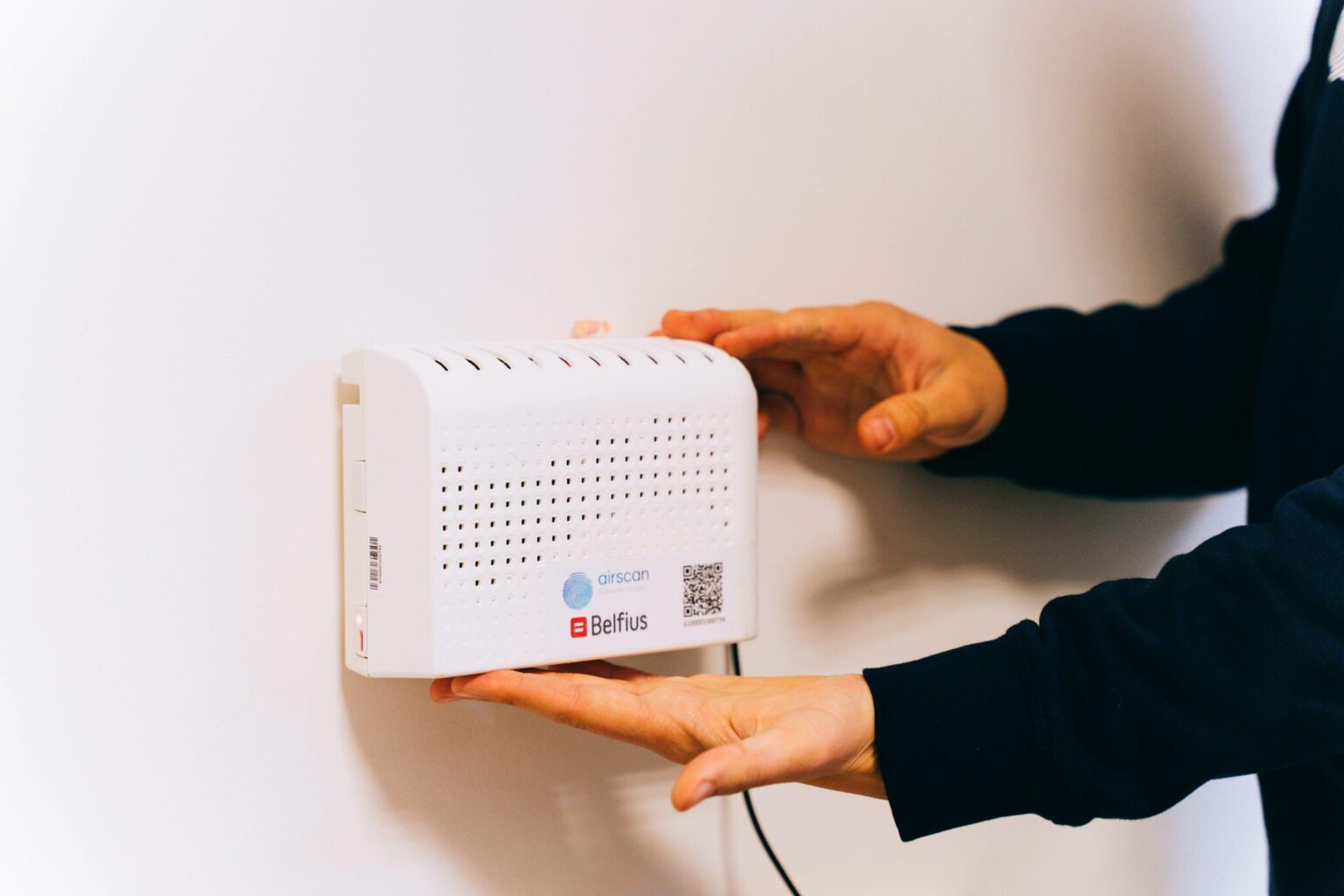
1. Analyze We deploy indoor/outdoor sensors to run short and long campaigns for particles, chemical, and biological compounds. We leverage a network of 300+ devices to capture school‑time peaks and pollution infiltration.
2. Improve Targeted actions and smart ventilation typically deliver around 20% energy savings while reducing exposure during arrivals, recess, and pick‑up windows. This is scalable from a single classroom to an entire campus.
3. Report We provide real-time dashboards for teachers and teams, visualizations for parents and municipalities, and documentation compliant with WHO and European air quality standards to ensure transparency and environmental compliance.