Project context
Corporate headquarters renovations increasingly serve as a visible expression of sustainability ambition. For financial and technology-led organisations in particular, environmental performance is closely linked to governance, employer responsibility, and long-term asset value. Certification frameworks such as BREEAM provide a structured way to demonstrate that renovated buildings meet high standards of health, sustainability, and operational quality.
Post-construction indoor air quality testing is a critical step in this process, ensuring that materials, finishes, and building systems do not introduce harmful pollutant concentrations prior to occupation.
Project overview
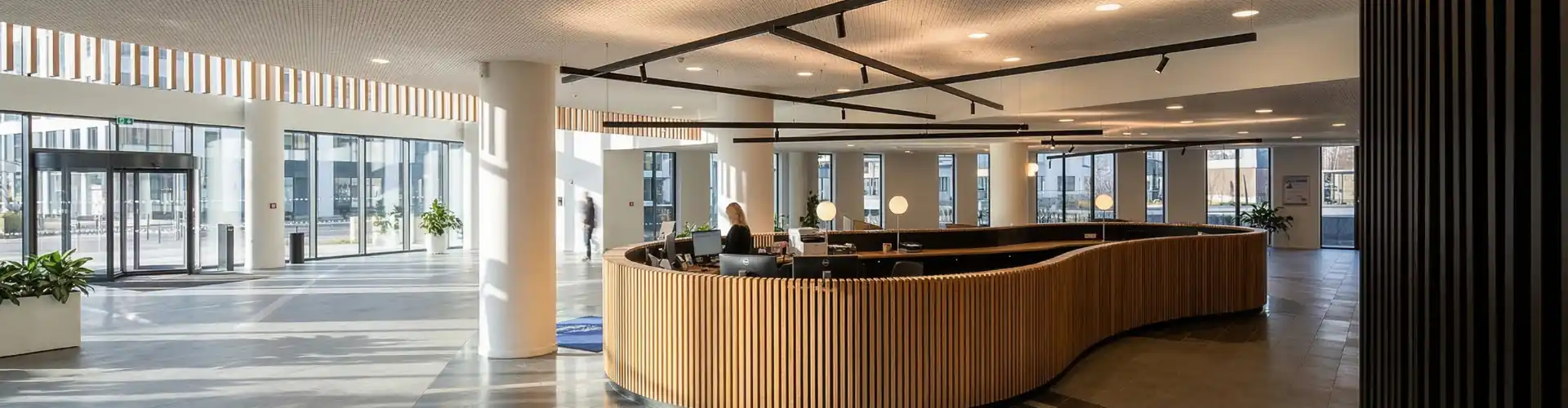
Mastercard’s newly renovated headquarters in Waterloo, Belgium was developed with the explicit objective of achieving BREEAM certification. Airscan was mandated by Cushman & Wakefield, acting as facilities manager, to assess post-construction indoor air quality conditions inside the building.
The results of the assessment were subsequently used by the project’s sustainability engineers, Sweco Belgium, as part of the application for BREEAM certification under the HEA 002 indoor air quality credit.

Scope
Airscan’s scope focused on post-construction indoor air quality testing in line with BREEAM requirements. The objective was to verify that volatile organic compound (VOC) emissions from building materials and finishes were within acceptable limits prior to occupation, supporting compliance with the BREEAM HEA indoor air quality criteria.
Methods
The indoor air quality assessment was performed in accordance with applicable international standards and BREEAM guidance.
Two groups of volatile organic compounds were assessed. Formaldehyde concentrations were measured according to ISO 16000-3, which defines active sampling methods for formaldehyde and other carbonyl compounds in indoor air. Total volatile organic compounds were assessed using the ISO 16000-6 standard method for VOC measurement through active sampling.
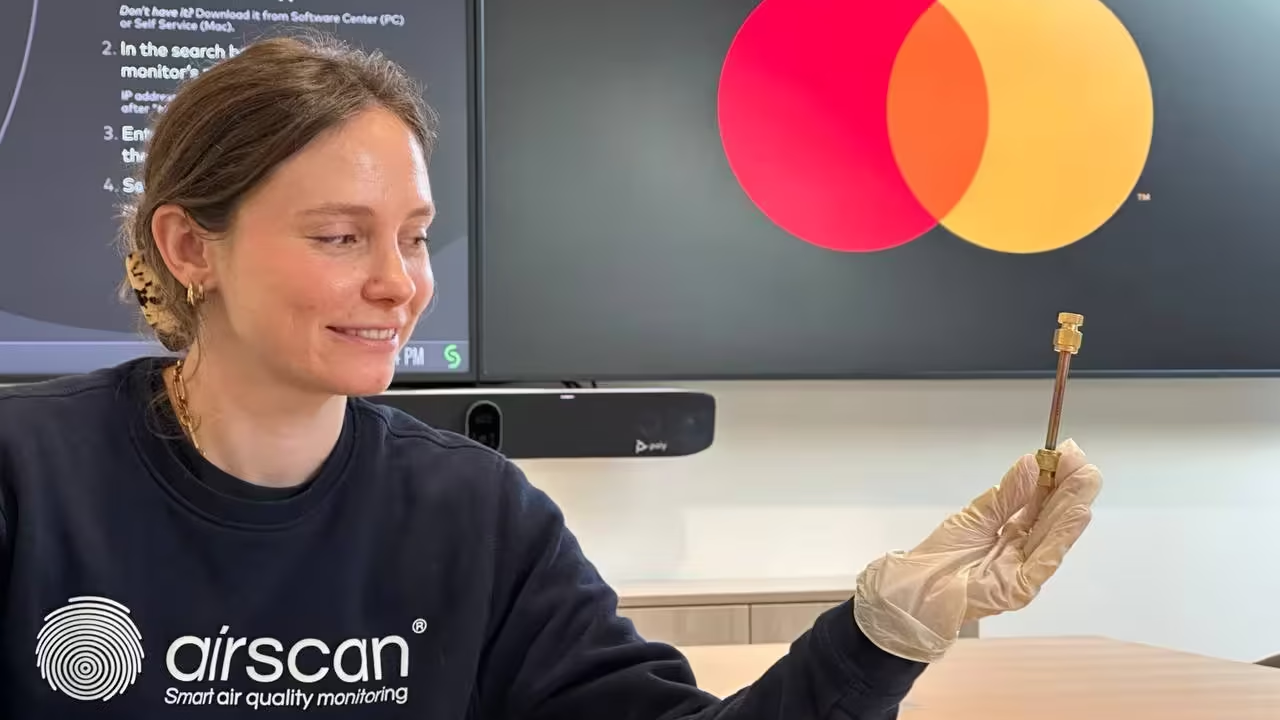
Sampling
Collected samples were analysed in an ISO/IEC 17025:2017 accredited laboratory between 12/02/2024 and 27/02/2024. Measurements were performed across six indoor locations within the building.
The results showed that average formaldehyde concentrations were below the threshold value of 100 µg/m³ in all tested locations. As a result, the indoor air quality conditions met the requirements of the “HEA – Indoor air quality testing, Volatile organic compound (VOC) emission levels (post-construction)” credit within the BREEAM framework.
Results
The results of the formaldehyde and total VOC assessments were reviewed by the Airscan project team and submitted to the BREEAM certification body as part of the overall certification documentation. You’re right — the original text incorrectly referenced another project here; this has been corrected while preserving the intent and outcome.
The validated data supported the project’s BREEAM certification objectives by demonstrating compliance with post-construction indoor air quality performance criteria for a renovated corporate headquarters.

Conclusion
Airscan conducted comprehensive post-construction indoor air quality testing at Mastercard’s renovated headquarters in Waterloo, Belgium. By verifying formaldehyde and total volatile organic compound concentrations against BREEAM thresholds, Airscan provided the performance evidence required to support certification and ensure healthy indoor conditions prior to building occupation.