Clean Air for Schools is a collaboration between Airscan and Belfius launched in 2020 to support Belgian schools in improving indoor air quality. Over a three-year period, indoor environmental data were collected and analysed in 72 schools across Belgium. Monitoring focused on three pollutant groups: carbon dioxide (CO₂), particulate matter (PM), and volatile organic compounds (VOC).
The programme was designed to provide schools with the technical, human, and financial means to identify air quality issues and reduce health risks while limiting unnecessary energy use.
Why indoor air quality in schools matters
Children spend approximately one third of their day indoors, with around 70% of that time spent inside classrooms. Compared with adults, children are more vulnerable to poor indoor air quality due to immature organs, smaller lung capacity, and higher breathing rates. As a result, degraded indoor environments can affect respiratory and cardiovascular health, as well as concentration, academic performance, and behaviour.
Because these exposures occur daily and over long periods, even moderate but persistent pollution levels can have cumulative effects.
Pollutant selection and measurement rationale
Indoor air quality encompasses a broad range of parameters. During the design of the project, Airscan deliberately limited the scope to three pollutant groups that are both prevalent in school environments and closely linked to ventilation and building operation.
Carbon dioxide is produced naturally through respiration. Although not toxic at typical indoor concentrations, it is a reliable indicator of ventilation adequacy. Elevated CO₂ levels indicate insufficient fresh air supply and, when accumulated in confined spaces, are associated with fatigue, reduced cognitive performance, and, in some cases, nausea.
Particulate matter in schools originates from multiple sources, including chalk use, degradation of building materials, art supplies, and the resuspension of deposited particles caused by occupant movement or airflow. Fine particulate matter is of particular concern because it can penetrate deep into the lungs, crossing physiological barriers and increasing the risk of respiratory infections and disease.
Volatile organic compounds are more difficult to attribute to single sources. They are commonly emitted by cleaning products, perfumes, glues, and certain paints. These compounds are chemically reactive and are associated with irritation, discomfort, reduced focus, and a range of adverse health effects.
Thresholds and reference framework
Pollutant thresholds were defined using established health and regulatory references. For CO₂, a limit of 900 ppm was applied, based on guidance from SPF Santé Publique, Sécurité de la Chaîne Alimentaire et Environnement. For PM2.5, the 2021 guideline of 5 µg/m³ issued by the World Health Organization was used. VOC concentrations were assessed against a threshold of 79.6 ppb (300 µg/m³), derived from the Binnenmilieubesluit issued by the Hoge Gezondheidsraad.
These reference values formed the basis for all comparative assessments carried out during the project.

Measurement process and follow-up
In each participating school, Airscan technicians installed three indoor monitoring devices in selected classrooms. After one month of data collection, an initial diagnosis was performed to establish baseline conditions. Results were presented to school directors, teachers, or prevention councils, together with practical recommendations.
These recommendations ranged from improving air exchange practices to adjusting cleaning schedules and product usage. A final assessment was conducted after six months to evaluate whether the proposed measures resulted in measurable improvements.
Average concentrations after six months
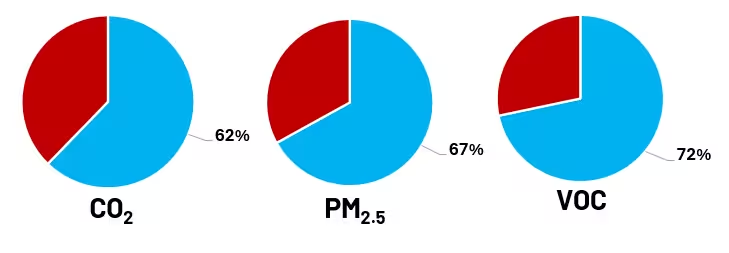
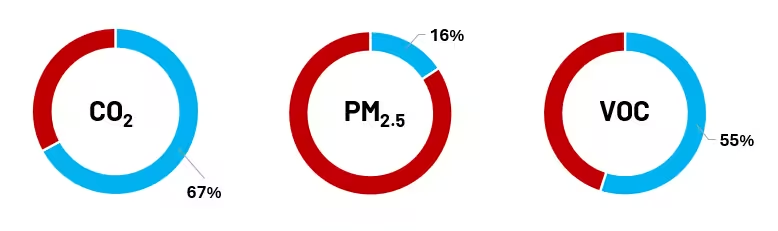
By the end of the six-month monitoring period, most schools recorded average concentrations below the recommended thresholds for carbon dioxide and volatile organic compounds. Sixty-seven percent of schools complied with the CO₂ threshold, while 55% complied with the VOC threshold.

Particulate matter showed a different pattern. Only 16% of schools recorded average PM2.5 concentrations below the WHO guideline, indicating that fine particles represent a more persistent challenge in school environments than CO₂ or VOCs.
Ventilation strategy and observed effects
Reliance on natural ventilation alone was often insufficient to maintain CO₂ concentrations below recommended limits, particularly in older buildings with limited operable windows or in small classrooms with high occupancy. Natural ventilation can also introduce outdoor pollutants into indoor spaces, which is especially relevant for particulate matter.
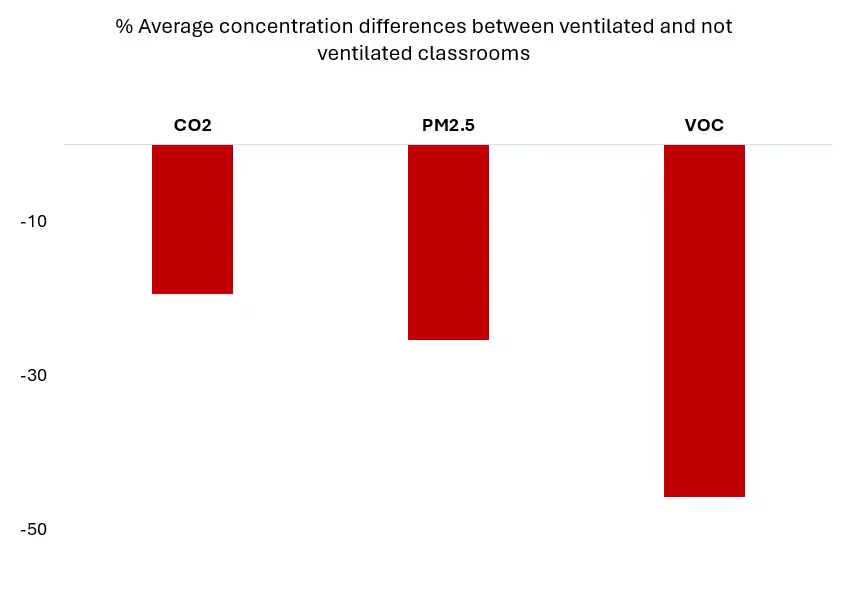
Classrooms equipped with mechanical ventilation systems showed consistent improvements across all three pollutant groups. Across the 72 schools studied, the installation of mechanical ventilation was associated with average reductions of 46% for VOCs, 25% for particulate matter, and 19% for carbon dioxide.
In one school, a mechanical ventilation system installed two months after the start of the measurement campaign reduced average CO₂ concentrations from 1,288 ppm to 811 ppm, alongside a 25% reduction in particulate matter and a 50% reduction in VOCs.
Maintenance and system limitations
The results also highlight that ventilation systems require appropriate maintenance and control. Clogged filters and contaminated ducts can restrict airflow and redistribute pollutants, while poorly designed systems may fail to reach all occupied zones or adequately manage humidity and temperature.
Ventilation effectiveness therefore depends not only on installation, but on long-term operation and oversight.
Targeted mitigation using air purifiers
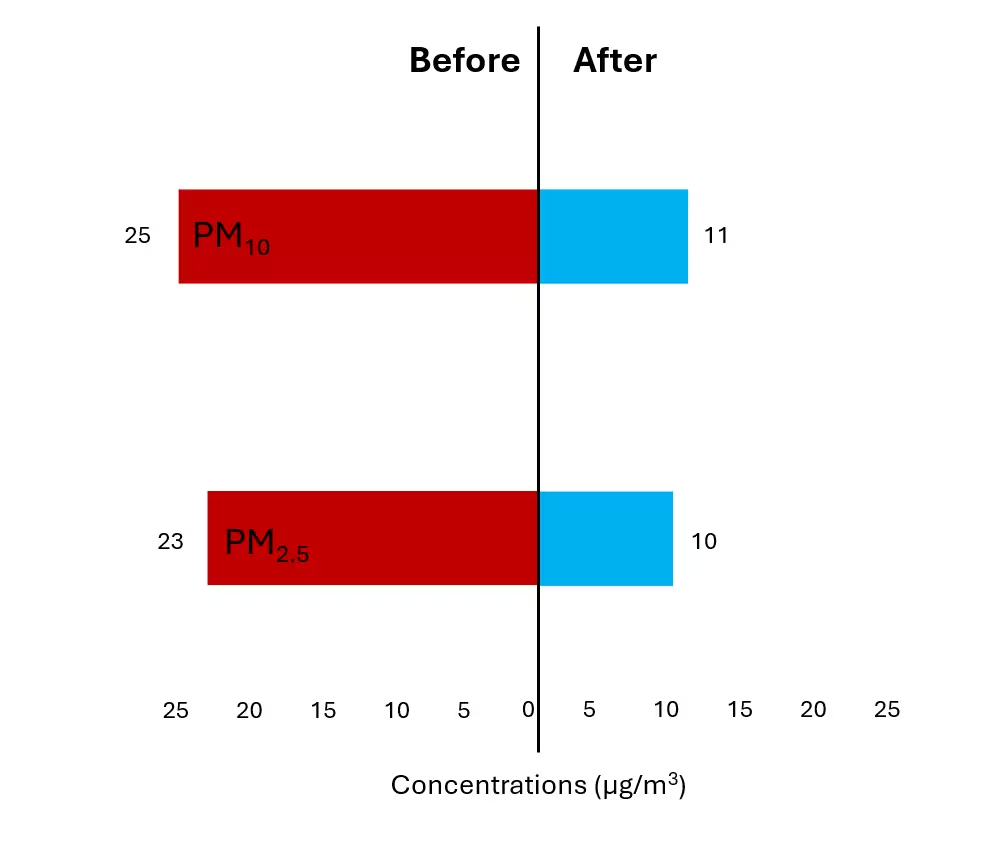
Where mechanical ventilation was not feasible, alternative measures were evaluated. In one school located next to a woodworking workshop, elevated particulate matter concentrations were addressed through the installation of an air purifier towards the end of the campaign.
Following installation, PM2.5 concentrations in the affected classroom decreased by more than 50%. This case highlights the influence of building infrastructure on indoor air quality outcomes, from window operability to the containment of emissions from specialised spaces.
Key observations from three years of monitoring
Three years of Beats for Planet data indicate that particulate matter represents a more persistent concern in Belgian schools than carbon dioxide or volatile organic compounds. Mechanical ventilation systems, when properly designed and maintained, significantly improve indoor air quality across all measured pollutants. Air purifiers can provide an effective supplementary measure for reducing particulate matter in classrooms subject to localised sources.