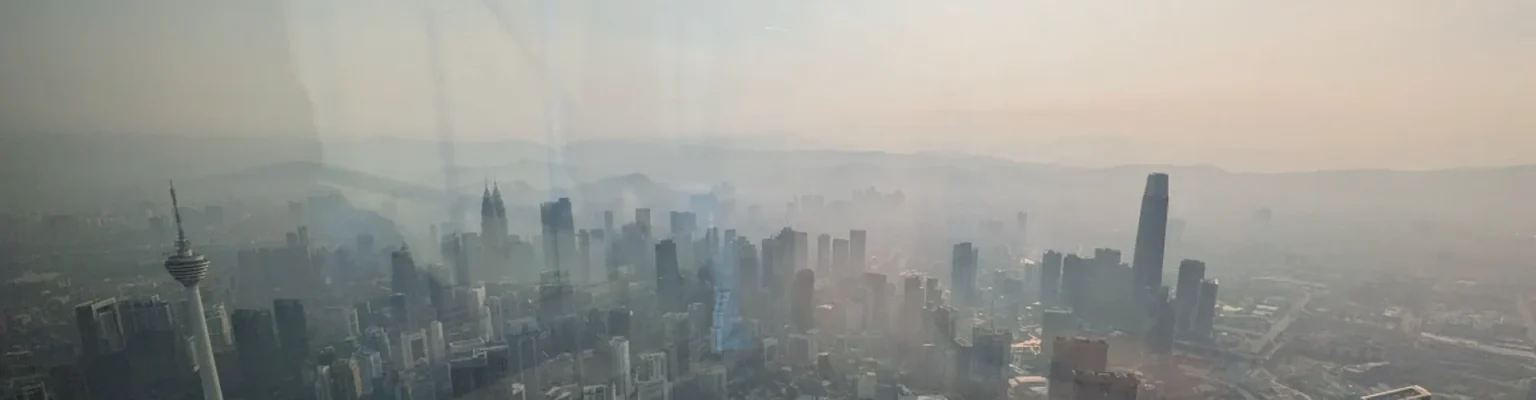
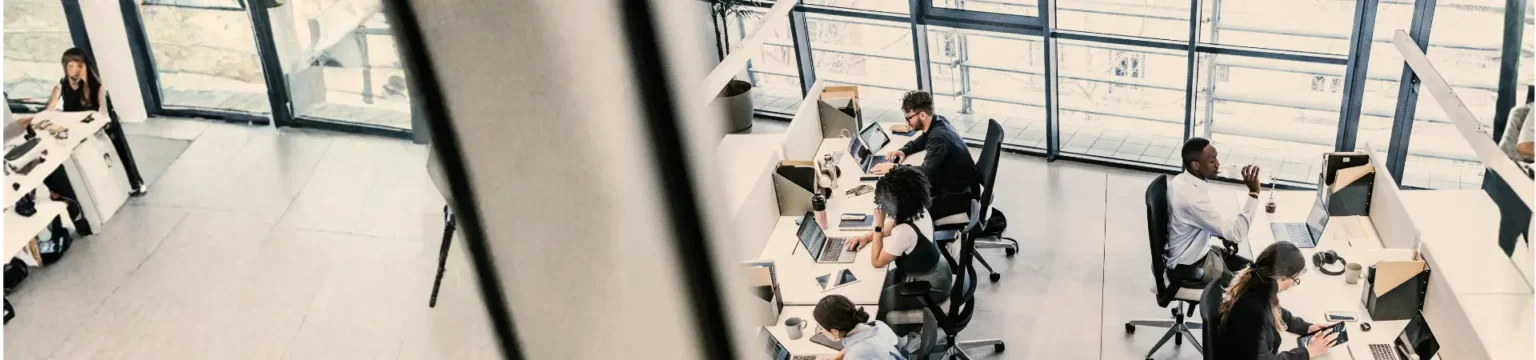
Every haze season, we tend to pull the same lever as a default recommendation about staying safe: stay indoors, close the schools, work from home, and don’t go outdoors.
It’s my default recommendation too, but there’s a nuance to this answer that I don’t think gets discussed enough. Yes, during haze episodes, outdoor air quality is absolutely worse than indoors. When the Air Pollutant Index (API) climbs into the unhealthy range, spend an hour outside and you’ll literally feel it in more ways than one.
I believe the default recommendation of staying indoors during a haze also points you towards a misleading conclusion that staying indoors is good enough to keep you safe. In truth, it’s safer against short-term acute symptoms of haze exposure, but the more dangerous particles in haze – the stuff you don’t smell or feel – is still very much present indoors.
Is haze dangerous?
Step outside on a bad haze day, where a shade of grey colours everything around you, and your body responds within seconds. Your eyes might water. Your nose gets runny. Your throat gets itchy and after hours you might develop a cough. For anyone with asthma or any other respiratory condition, your symptoms arrive faster and hit harder.
That discomfort is your body doing its job. Haze carries particles of many sizes, and the larger ones – PM10, roughly 2.5 to 10 micrometers across – are big enough to be trapped in your nose, throat, and upper airways. Those passages are rich with nerve endings and a layer of mucus that catches the particles and pushes them back up so you can cough them up. Your body responds with inflammation, blocking your nose to stop those particles from entering. You feel the haze when you’re outdoors because your body is adapting to catch these larger particles early.
The pollutant you might hear a lot about during haze is PM2.5, fine particles smaller than 2.5 micrometers, usually the main driver of the API when the readings climb. These particles are so small that they’re able to slip straight past the defences in your nose and throat, settling deep in the lungs, in the alveoli, the tiny sacs where oxygen passes into your blood. Your body does fight back down there with specialised cells that engulf the particles, and inflammation sets in. But the deep lung has almost none of the nerve endings that trigger a cough. So you don’t feel the immediate symptoms from PM2.5 exposure.
The ultrafine particles, roughly 0.001 to 0.1 micron in size, pass even those defences and enter the bloodstream. So is haze dangerous? This is where the real danger lives. Anything that crosses into your bloodstream carries a risk of cardiovascular disease, inflammation throughout the body, stroke, and raised cancer risk over years of exposure. By the time there is anything to feel, the particles responsible are already deep in your system. By the way, if you’re familiar with the topic, these are also the same risks of smoking and vaping, because smoking and vaping are direct delivery systems for these ultrafine particles – straight to your lungs and your bloodstream! Topic for another day perhaps?
Why indoor air during haze isn’t necessarily safer
I recently brought one of Airscan’s indoor air quality monitoring units back home to demonstrate to relatives and anyone that asked me about the haze (who also tend to be stubborn) that indoor and outdoor PM2.5 is similar. In fact, this little “home experiment” sparked the sequence of conversations (and realisations that there are several misconceptions about staying safe during the haze) gave me the spark to write this article today.
I left the sensor on for the whole day, windows, doors, every opening completely shut, and purifier turned off. When I got home from work, indoor PM2.5 readings ranged from 141-154 micrograms per cubic metre (µg/m³). Our nearest outdoor sensor, about 4.3 kilometers away, was reading PM2.5 of around 147-173µg/m³ at the same time! That’s uncomfortably close for that dangerous particle I mentioned above. For context, the World Health Organisation’s 24-hour guideline for PM2.5 is 15µg/m³, and my home was roughly 10 times above that.
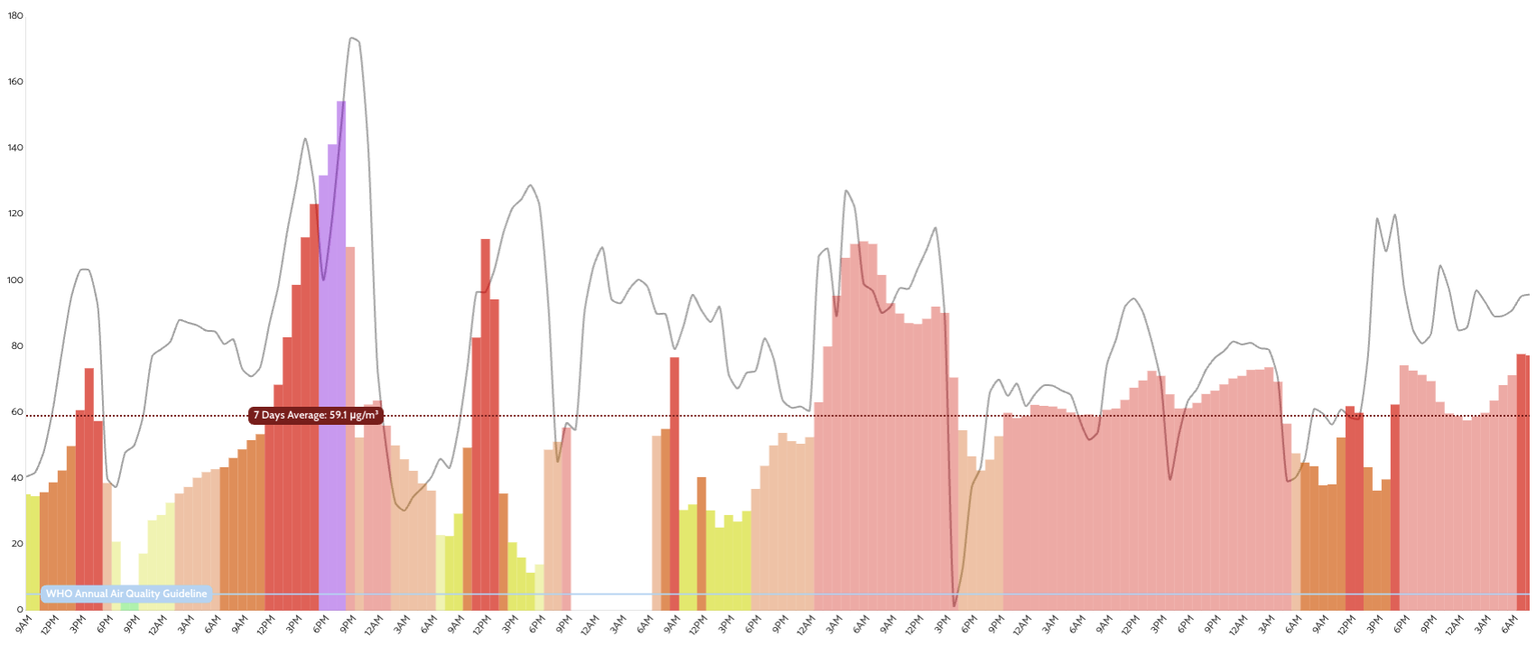
Why are the two numbers uncomfortably close? Because houses were designed as naturally-ventilated buildings. A normal home has no central system drawing in clean air. It breathes through gaps: under doors, around window frames, through every small opening. That’s how indoor air stays fresh in ordinary conditions. In fact, poor ventilation is a strong signal of air quality problems in a space. But that’s outside of the haze season.
The principle is the same as the health effects section above. Homes effectively keep PM10 out. These heavier particles fall out of the air faster and get filtered by walls, windows and surfaces. That’s why you tend to only feel those “haze” symptoms when you spend a little time outside. But PM2.5 behaves more like a gas – it follows airflow through the gaps in your home. One commonly-referenced research found that naturally ventilated homes land roughly 50% to 90% of outdoor PM2.5 levels. That’s not much of a defence at all.
Another misconception that my ageing relatives have is that air conditioning keeps you safe by filtering out these particles. Your typical air conditioning unit cools and recirculates air that’s already in the room. It doesn’t draw in fresh outside air. That’s why the filter (that thing you clean from time to time) is indoors, not at the compressor outside. So you’re breathing in cooler air filled with PM2.5 if you have no other intervention during a haze.
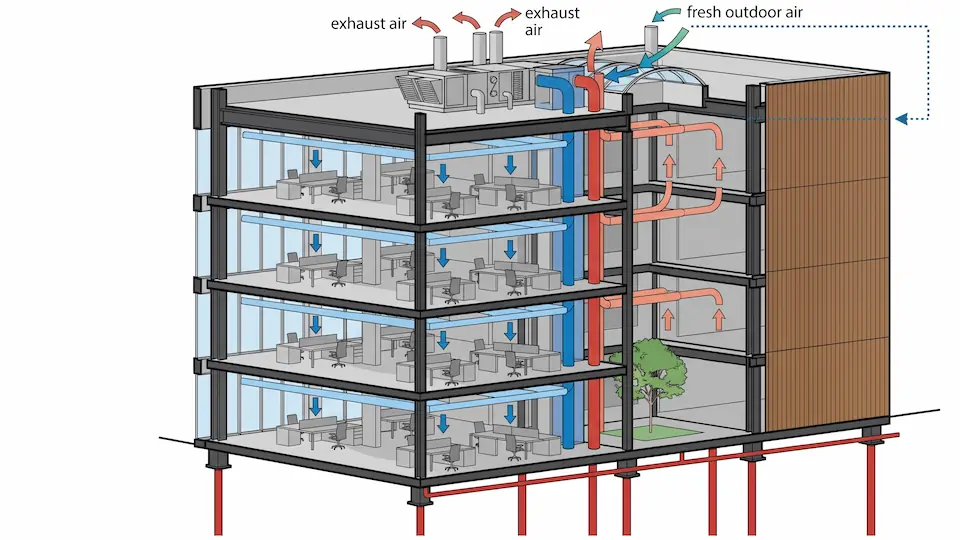
What about larger buildings with centralised ventilation? Are we safer in typical office buildings during haze? The answer depends on the building’s filtration system. Modern buildings fitted with high efficiency filtration (MERV 13 and above) are substantially safer. Check out Fatin Syazana’s recent piece about the state of the art filtration system of Merdeka 118. But most buildings aren’t built with the best in class systems like the 2nd tallest building in the world, also the tallest WELL Core Platinum certified building in the world.
In a majority of the buildings that we help to run continue bewaking van de luchtkwaliteit binnenshuis across Malaysia, we see a common pattern of indoor PM2.5 rising and falling to the same beat as the outdoor data. I always love pulling out PM2.5 data from a random meeting room where we’ve placed a sensor in an office building, far from the lobby. When we pair this meeting room data with a distant outdoor sensor, we find a 0.6 correlation, with PM2.5 levels averaging at 50-65% of the outdoor levels.
That’s centralised ventilation with a less than ideal filtration system, pulling in at least half of the outdoor PM2.5 particles into the air you breathe at the office. It’s filtered out the coarse particles and the bits that smell, so you don’t feel like you’re breathing in bad air. You feel safer in a sealed building, but you’re not.
How to stay safe during haze
So the outside air is bad during a haze and indoor air isn’t necessarily safer either. So how then do we stay safe during a haze? Is there anything that we can do? Yes there is.
The first thing is to limit outdoor exposure. Yes, the standard advice holds up. Stay indoors as much as you can. Avoid outdoor exercise, which forces far more air into your lungs. Keep the elderly, young children, and anyone with a heart or lung condition inside.
If you must go out, even for that short walk from the lobby to your car, wear a properly fitted N95 mask. I had to relearn the latest numbers in commercial face mask efficiency during the process of building this.. unofficial “essential haze guide” for friends and family, and here are the numbers:
- Even basic surgical masks contribute to a 25% reduction in PM2.5. The material catches a meaningful portion PM2.5 particles, but the unfiltered air follows the path of least resistance: around the gaps at your nose bridge, cheeks, or chin.
- Fit tests of surgical masks with less leakage gives you roughly 47-60% reduction in PM2.5.
- Loose / unsealed KN95 masks give a 50% reduction in PM2.5. Fitting it well moves you to within the 70% band.
25% to 70% reduction in PM2.5 is still a meaningful reduction. So wear a mask no matter how long you intend to spend outside – or don’t go outside at all.
Next, while staying indoors, you HAVE to use air purifiers with HEPA-grade filters. Otherwise, with PM2.5 levels 50-90% of the outdoor levels, what’s the point of staying indoors? This is another point of contention in my long talks with relatives about staying safe during the haze: air purifiers really work. They’re not a scam. At least the HEPA-grade ones.
Because PM2.5 are light enough to behave like gasses, and stay suspended in the air, I’ve seen meaningful PM2.5 reductions over 4-6 hours even if you place sensors far away in a different connected space to the purifier – as long as you’re not constantly spiking the levels by opening up your windows. The PM2.5 particles will find its way to the suction of the purifier by way of air circulation.
Air purifiers are an investment, they’re not necessarily cheap, granted. But without one, wearing a mask indoors is the only other intervention that makes sense.
How to check indoor air quality
Which leads to the ultimate message: all of this, being able to know what to do during air pollution events, how to keep safe, starts by understanding what the air is actually doing. I always say indoor air quality testing or monitoring is like illuminating a dark room and finding out where things are. There are two ways to check indoor air quality.
The first is point-in-time testing – a formal assessment. A trained assessor such as myself arrives with calibrated instruments and measures PM2.5 along with other factors such as carbon dioxide, carbon monoxide, and humidity at the very moment, and then checks the results against a recognised standard. For Malaysian workplaces, the standard is the Department of Occupational Safety and Health’s Industry Code of Practice for Indoor Air Quality (ICOP IAQ 2010). This is what you need when a real measurement has to go on record: a complaint, a dispute, a building handover.
The second is continuous monitoring – the sensors like the one I took home, left in the space, logging air quality around the clock. Instead of a single snapshot, you get the pattern: when the air spikes, whether it tracks the outdoor haze, whether your purifier is holding PM2.5 levels down overnight, whether things are getting better or worse.
For a home, if all you want to know is whether your purifier is doing anything, whether to turn it on at full blast or not, an inexpensive continuous monitoring device tells you far more than any one-off reading.
For employers with staff to protect, both formal IAQ assessments and continuous monitoring earn their place – the assessment to establish your baseline, and the monitoring to find the patterns afterwards.
Staying indoors during the haze helps, whether it is safe enough is a question only measurement can answer.
If you’d like to learn more about indoor air quality or even the different types of solutions available to understand the field better, here are some useful resources:
- Emerging air quality monitoring trends 2025
- OSHA and ICOP IAQ 2010: a look inside the indoor air quality laws in Malaysia
- Symptoms of poor indoor air quality in Malaysian offices
- What El Nino means for indoor environments in Malaysia
- World Health Organisation (WHO) air quality guidelines
- Continuous indoor air quality monitoring
- Indoor air quality testing based on ICOP IAQ 2010
If you’d like to discuss the air quality in your building or office space, contact us.