Have you noticed something funky with Malaysian weather recently? That it’s a little hotter than normal; the sun feels like it’s shining a little brighter? And when it rains, it feels like a heavier storm than usual. What we’re experiencing is El Niño, which formed in the Pacific Ocean earlier this year and will continue to shape conditions across Malaysia through the end of 2026 and into 2027. MetMalaysia’s latest outlook says there’s a 63% probability of Super El Niño, meaning effects that are even more extreme.
Some of El Niño’s most damaging effects are on agriculture, as heat stress and reduced rainfall threatens yield. Water security has become a national concern too, with roughly a quarter of Malaysia’s reservoirs already sitting at cautionary levels. And food security is expected to follow from there, as lower rainfall and hotter conditions directly reduces what the entire region produces. Public health authorities are tracking rising cases of heat-related illness – heat exhaustion and heatstroke cases, for example – and if the pattern from the Super El Niño events of 1997 and 2015 holds, transboundary haze from Indonesian peatland fires is likely to reach us in the latter half of 2026 and bring an increase in respiratory illness across the region.
Along with these extreme effects happening outdoors, it’s worth to consider how these conditions will affect our indoor environments. Here are three specific consequences of El Niño for indoor environments across Malaysia.
1. Occupant health and productivity tend to suffer the most in older buildings
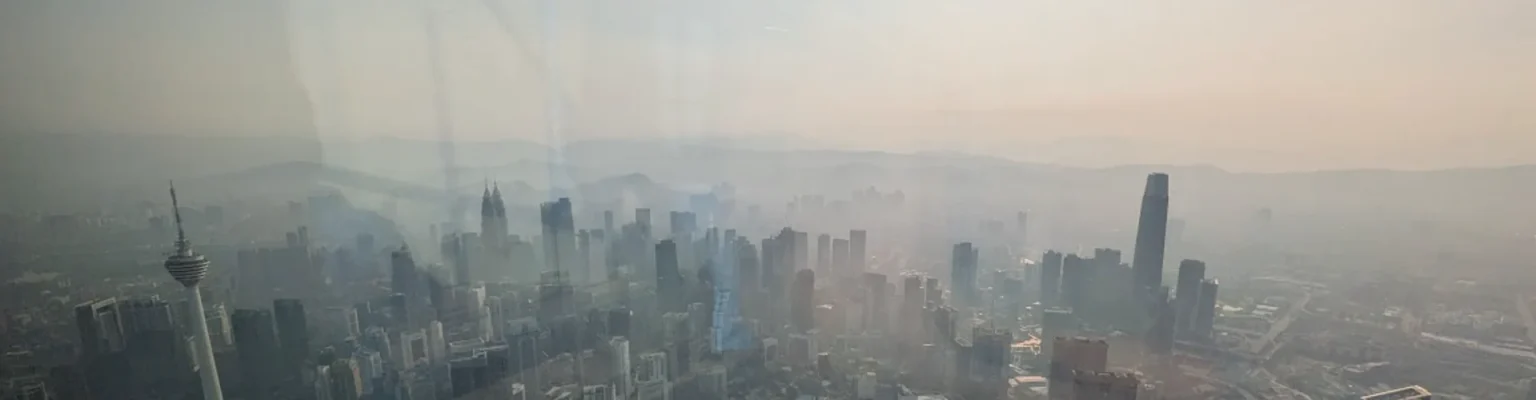
El Niño pushes outdoor temperatures 2 to 4C above seasonal norms across Malaysia, with daytime highs forecast to go above 40C between March and May 2027. From late 2026, transboundary haze from Indonesian peatland fires is expected to send outdoor PM2.5 well past safe levels for weeks at a time. Older buildings cannot hold these conditions out.
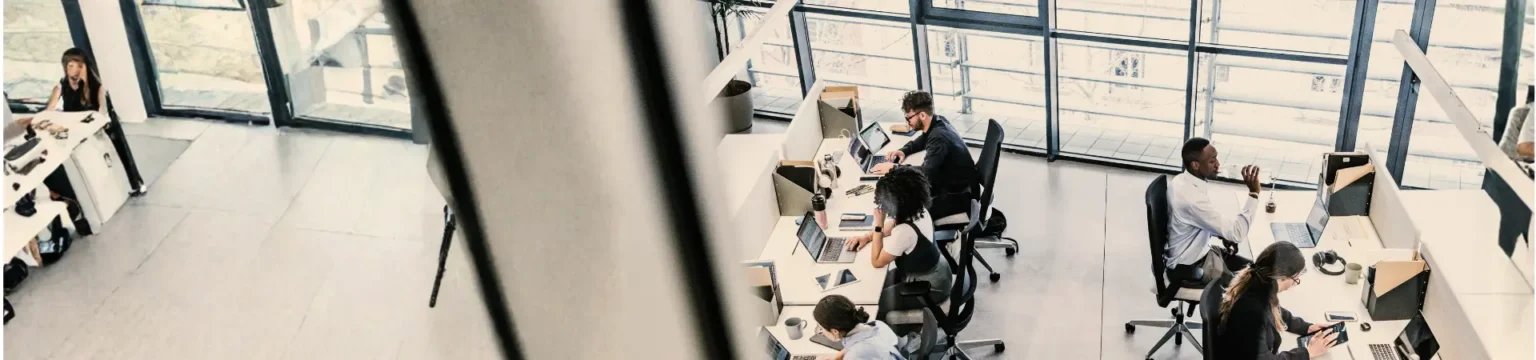
In older buildings, cooling systems run at full capacity and still miss setpoints by 2 to 3 degrees in the afternoon, leaving indoor temperatures slightly above the comfort range for most of the working day. Gaps in the envelope let hot outdoor air leak into occupied space, carrying haze particles with it. Research on office environments has consistently shown that even small increases above the thermal comfort range measurably slows cognitive performance, reduces accuracy on complex tasks, and lowers typing and reading speed – without you needing to feel physically uncomfortable. The building feels fine. Output drops anyway.
Older buildings don’t have high efficiency filters required to catch PM2.5 particles, so haze concentrations build up indoors even with the air-condition and ventilation running. You probably already know this, but the reason PM2.5 is so bad is that they’re particles small enough to lodge deep in the lungs and cross into the bloodstream, causing inflammation and aggravating asthma and heart conditions, and raises the long-term risk of serious respiratory or heart conditions.
Over weeks of this type of exposure, sick days climb and respiratory complaints follow. For more information on the typical symptoms you’d experience from bad air quality in Malaysian offices, check out my last article.
2. HVAC systems degrade under sustained load
Air-conditioning already accounts for 42% to 49% of electricity use in Malaysian commercial buildings under normal operating conditions. During El Niño, chillers run longer to hold setpoint against higher outdoor temperatures and increased solar load through the envelope, and operating cost rises with them. That pressure pushes facility managers into two kinds of decisions that both degrade indoor air quality:
- One is reducing outdoor air makeup, since bringing in less hot air outside lowers cooling load and saves energy. The same reduction also cuts dilution of what occupants produce inside: CO2 from breathing, VOCs from furnishings and cleaning products, formaldehyde from cleaning products, human bioaerosols. Indoor concentrations climb through the day even in spaces that feel thermally comfortable.
- The other is deferring planned maintenance: filter replacements, coil cleaning, scheduled servicing that is now accelerated because of the increased system load. Deferred maintenance works against the energy savings, because dirty coils lose heat-exchange efficiency and force the chiller to run longer for the same cooling output, while loaded filters restrict airflow and drop supply air volumes below design values. Both effects degrade the indoor environment quietly, and the problem usually only surfaces once occupant complaints reach the facilities inbox.
3. Enclosed public spaces get more crowded, and infections spread more easily
During Malaysian heatwaves, people tend to converge on enclosed public spaces like shopping malls and air-conditioned spaces – in large numbers. This leads to overcrowding, which raises CO2 and indoor temperature even in modern buildings with centralised ventilation. Modern malls with demand-controlled ventilation should, in principle, scale outdoor air with occupancy, but field data shows they often don’t cope with abnormal peaks, at which point CO2 climbs, air feels stuffy, and indoor temperature creeps up as body-heat gain outpaces what the cooling system was sized to remove.
The bigger consequence is that respiratory infections move between people much more easily inside a packed enclosed space. Sustained close-proximity contact across a couple hours, in the same volume of shared air, gives any circulating respiratory pathogen a straightforward path from one person to the next. A season of Super El Niño runs that setup on repeat across months of peak heat, with the same crowds funnelled into the same enclosed spaces, weekend after weekend.
Monitoring, because you can’t act on what you can’t see
Everything El Niño is doing outside is visible. You see it in the news, the heatwaves, the haze advisories that will roll in with the monsoon shift. What it’s doing indoors, to the air you’re breathing for 8 to 9 hours a day, and to the systems keeping the space livable, is invisible. You’d have to trust the room, which is a lot to extend to buildings designed for average conditions throughout the year and is being asked to manage an extreme one.
The first step is to start with continuous monitoring. Because it answers the one question that matters right now: how is your space actually performing? Every decision downstream – whether to upgrade filters, whether to recommission the ventilation, whether to push back on facilities about the maintenance backlog – depends on whether you know what’s actually happening and when. You can’t fix what you can’t see, and you can’t make the case for a fix without something to point at.
There’s also a timing argument worth naming. El Niño is a defined window running through 2027, and it stress-tests buildings the way nothing else will for years (probably!). Whatever you learn about your space during this period becomes a type of baseline that can shape every environmental decision you make once conditions settle. Skip this window – and by that I mean, skip understanding what these extreme shifts in outdoor conditions actually does to your indoor environment – and you’re back to arguing from theory.