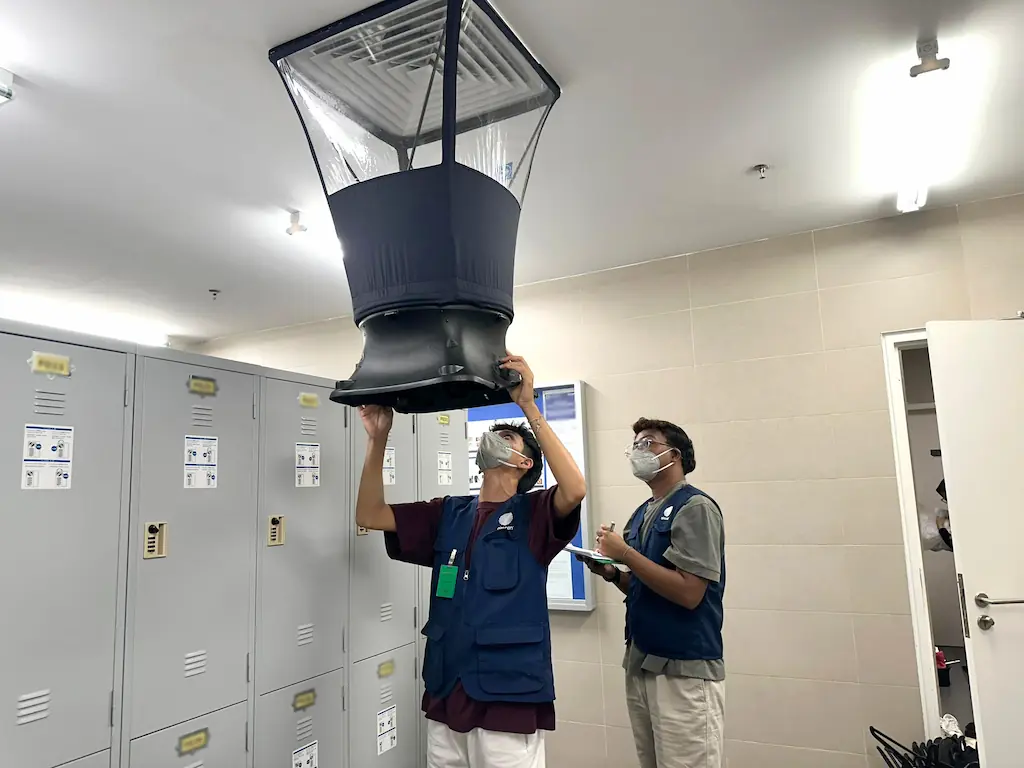
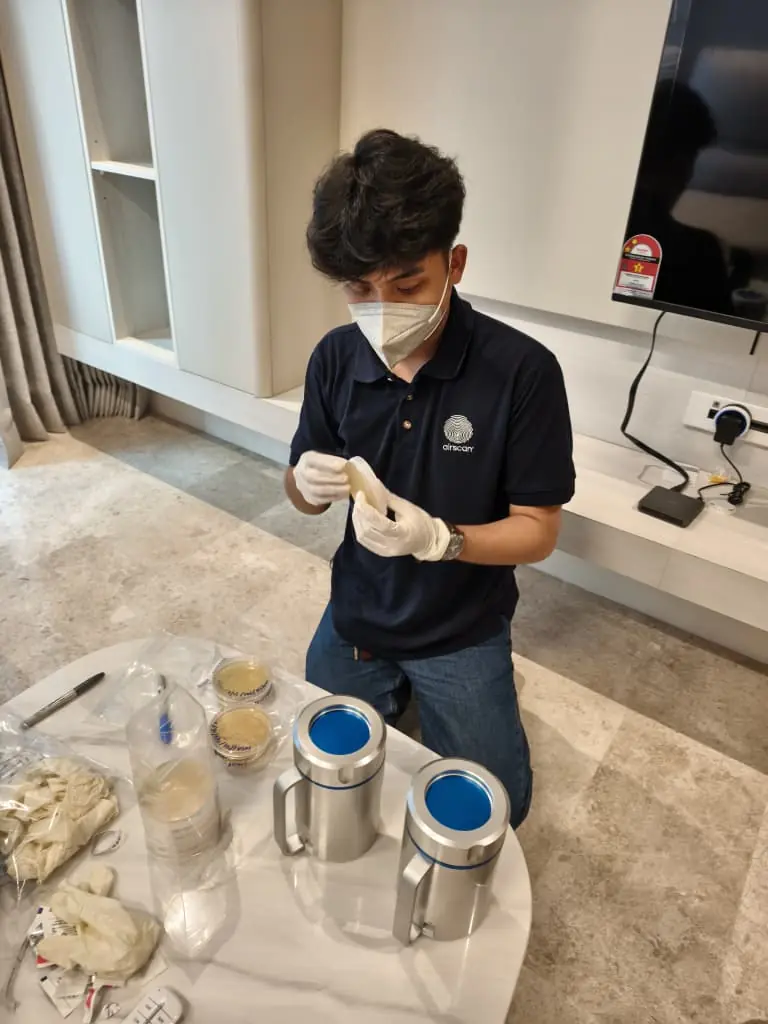
Airscan delivers formal workplace air quality assessment covering the full physical, chemical and biological scope that Malaysian occupational safety law requires of every commercial workplace.
Assessed by:
The Industry Code of Practice on Indoor Air Quality 2010 (ICOP IAQ 2010), gazetted by the Department of Occupational Safety and Health, sets acceptable thresholds for temperature, humidity, air movement, chemical contaminants and microbiology in any workspace served by mechanical ventilation. ICOP places ongoing duties on employers: maintain the air, document the maintenance, and produce evidence of compliance when DOSH requests it.
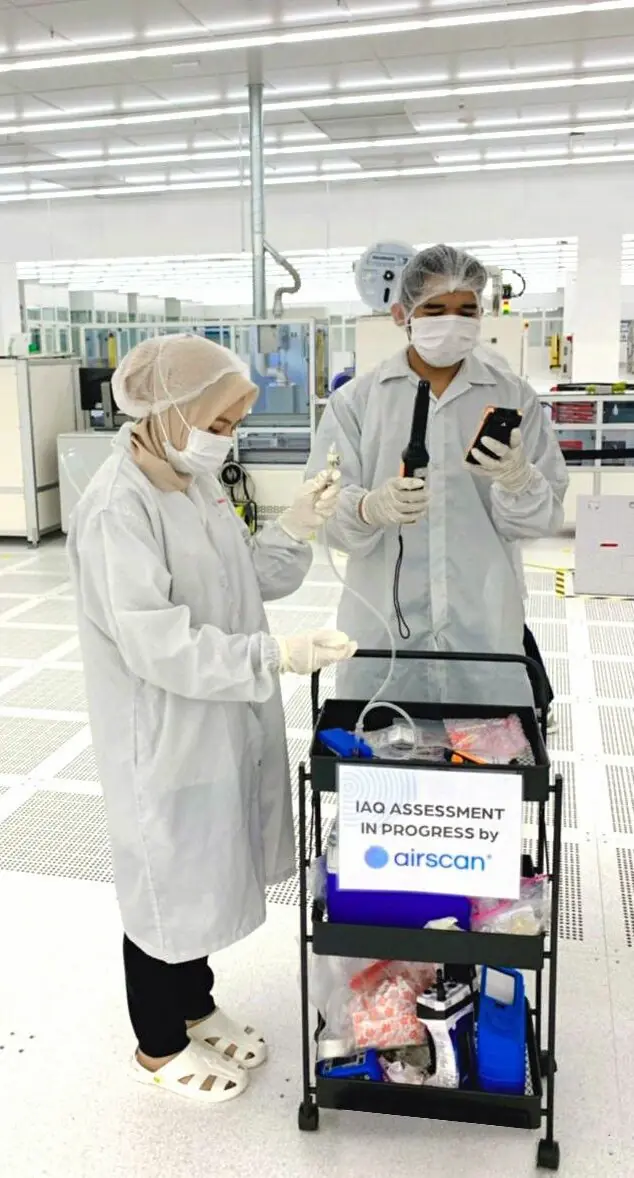
A formal IAQ assessment by a DOSH-registered Assessor is the instrument that produces that evidence. Airscan Malaysia delivers formal IAQ assessments based on ICOP IAQ 2010, conducted by our in-house registered IAQ Assessor across the full scope of parameters the standard requires.


Occupant complaints about air quality, temperature or persistent odours that internal troubleshooting can't resolve.
A formal directive from DOSH following a workplace audit or an escalated complaint requires assessment by a registered IAQ Assessor.
New laminates, adhesives & wood off-gas formaldehyde & VOCs months after installation, making assessment the practical standard before re-occupation.
New or significantly modified ventilation systems change the air delivery profile of a space - which warrants verification against ICOP's physical & chemical limits.
A building with no prior formal assessment has no documented evidence of compliance.
Multinational tenants and institutional occupants increasingly require verified IAQ data during pre-lease evaluation.
Review occupant complaint history, building layout, ventilation system configuration & operational context to define the assessment scope & sampling strategy.
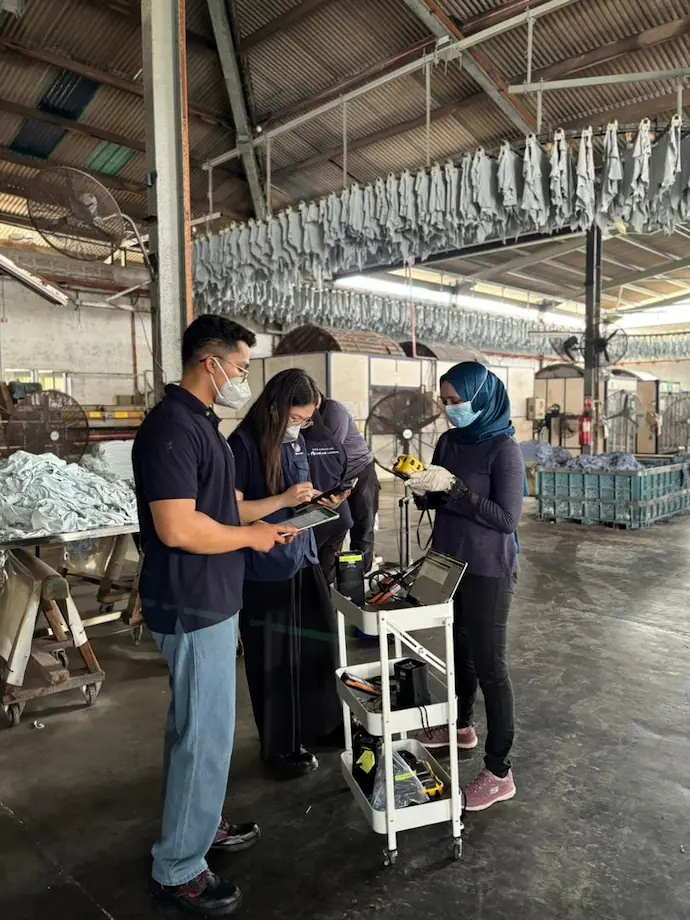
On-site visual inspection of ductwork, cooling coils, drain pans, AHUs, filtration systems & potential contamination sources.
Sampling points are determined by floor area using ICOP's prescribed density guidelines, designed to capture representative conditions across all zones.
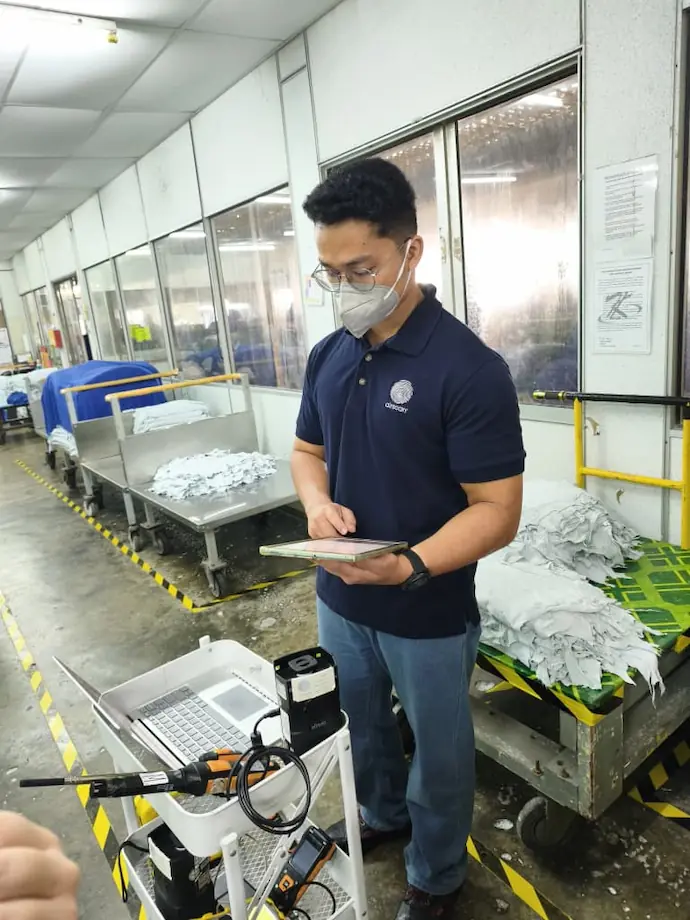
Physical & chemical parameters are measured simultaneously over an 8-hour period under normal occupancy.
Air samples for total bacterial count and total fungal count are collected onsite and submitted for analysis to a laboratory accredited by Department of Standards Malaysia.
Comprehensive report covering compliance status per parameter across sampling points, identified pollution sources, MVAC system evaluation, and prioritised corrective action.
Full documentation sampling methods, equipment used and calibration status.
Contamination sources identified through inspection and measurement data, with location and likely contributors.
Tabulated measurments for each parameter at each sampling location.
Condition assessment of ventilation system, covering identified deficiencies in maintenance, filtration and airflow delivery.
Documentation of occupant complaints + correlation to measured conditions and identified contamination sources.
Pass or fail determination per parameter at each sampling point.
Prioritised recommendations for bringing non-compliant parameters within acceptable limits, with practical guidance on implementation sequence.

ICOP IAQ 2010 assessments cover ten parameters across three categories, each measured against DOSH’s published acceptable limits.
A formal ICOP assessment must be conducted by a DOSH-registered IAQ Assessor, follows ICOP’s prescribed sampling density per floor area, measures all parameters over an 8-hour time-weighted average under normal occupancy, and produces a report that carries legal standing as evidence of compliance under OSHA 1994.
A generic IAQ test, whether performed with handheld instruments, by an unregistered contractor, or using a different sampling methodology, may produce useful data, but the resulting report has no standing if DOSH requests evidence of compliance or if the assessment is produced in response to a directive.
A breach of general duty under OSHA 1994 can carry a fine of up to RM500,000, imprisonment of up to 2 years, or both. Failure to comply with a Notice of Improvement or Notice of Prohibition issued by DOSH reaches the same RM500,000 ceiling, and continued non-compliance after a notice incurs a daily penalty of RM2,000. The OSHA Amendment 2022 introduced personal liability for directors and managers, which means the consequences of a serious IAQ failure extend beyond the company to the individuals responsible for the workplace.
An OSH Coordinator must be appointed if the workplace has 5 or more employees and does not employ a dedicated Safety and Health Officer. A documented complaint procedure must exist in writing and be accessible to all staff. MVAC systems must be inspected and maintained at least every six months, with records kept as evidence. All employees must receive training on ICOP’s contents and how to recognise signs of poor ventilation at least once every two years. These 4 duties apply independently of whether the air sits within acceptable range on any given day, and DOSH expects to find documentation for each of them during an audit.
Any building or enclosed area served by a mechanical ventilating and air conditioning system, including air-cooled split units. Following the OSHA Amendment 2022, every commercial workplace in Malaysia falls within the Act’s enforcement scope. Domestic buildings constructed, used or intended for habitation are excluded, as are industrial premises covered by separate regulations under the Factories and Machinery Act.
The assessment report identifies which parameters exceeded acceptable limits, where the exceedances occurred, and what’s likely causing them. Corrective actions are prioritised based on severity, with practical guidance on implementation sequence. For buildings where conditions fluctuate between periodic assessments, continue bewaking van de luchtkwaliteit binnenshuis provides (among a host of important applications) real-time visibility into parameter trends and alerts building management when conditions drift outside the acceptable range.
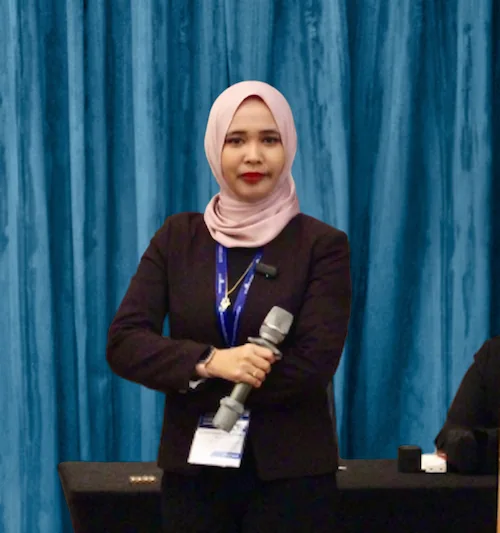
Only a person registered with the Director General of DOSH as an Indoor Air Quality Assessor. Registration requires specific qualifications, experience, and training, and must be renewed periodically. Self-certification has no legal standing, and an assessment signed by anyone without DOSH registration will not satisfy ICOP’s requirements in the event of an audit, directive or legal proceeding. Find out more about, or connect with Syida Nazri, Airscan’s IAQ Assessor.
Assessment reports must be retained for thirty years. Complaint logs, investigation reports, training records, and MVAC maintenance records must be kept for five years. These retention periods are prescribed by ICOP and apply regardless of whether the building changes ownership or management during the retention window.
Airscan’s IAQ team advises building operators across Malaysia on ICOP compliance, but the right first step depends on your building – a formal assessment, a scoping conversation, or sometimes an honest answer whether you need one at all.